Understanding the Rolling Machine (Rolling Mill)
I. Introduction to the Rolling Mill
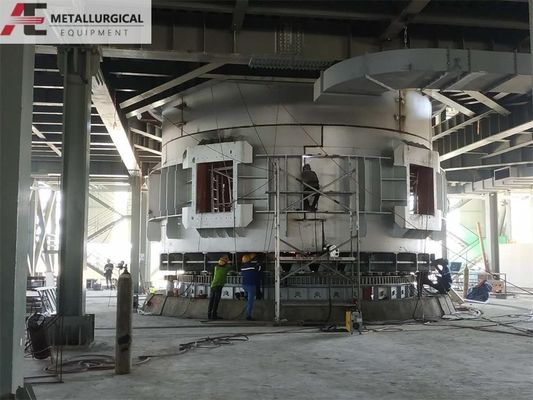
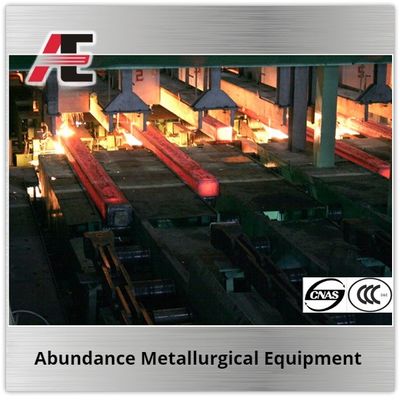
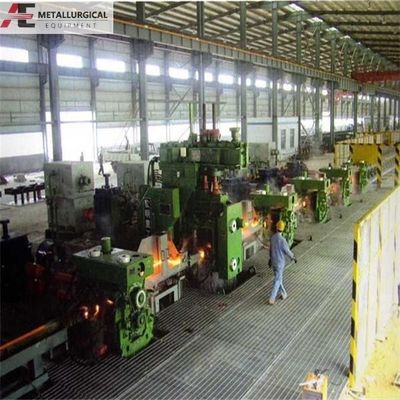
A rolling mill, or rolling machine, is an industrial facility designed for the metal rolling process. It encompasses the complete set of equipment required for rolling production. This includes not only the main rolling stand but also auxiliary systems, material handling equipment (such as cranes and conveyors), and supporting infrastructure. A typical rolling mill is a complex integration of numerous components, primarily featuring:
Rolls: The core tools that apply pressure to deform the metal.
Mill Housing/Housing: The robust frame that supports all rolling forces.
Bearings & Bearing Chocks: Support the rolls and allow their rotation.
Roll Adjustment & Balance Systems: For precise control of roll gap and positioning.
Roll Changing Devices: To facilitate quick replacement of worn rolls.
Drive System: Provides the necessary power to rotate the rolls.
Downstream Equipment: Such as cooling beds, finishing facilities (e.g., cold shears), and bundling systems with bar counters and wire tying machines.
II. Key Characteristics of Rebar Rolling Mills
Specialized rolling mills for producing reinforcing bars (rebar) often incorporate distinct features for efficiency and quality:
1. Four-Roller Pass Design: Utilizes a complex section pass formed by four rollers. This allows all parts of the billet's cross-section to be compressed simultaneously, resulting in more uniform deformation, minimal speed differentials around the section, and reduced internal stress within the rolled product.
2. Smaller Roll Diameter & Superior Geometry: Enables the use of rolls with smaller diameters (as no deep grooves are required) to produce products with taller legs and wider webs. Crucially, it allows the inner sides of the rebar's legs to be produced without inclination—a feat difficult to achieve on conventional two-high mills.
3. Independent Adjustment: Permits separate adjustment of the reduction for the leg and web sections of the rebar, significantly simplifying the mill setup and adjustment process during rolling.
4. Enhanced Performance: Delivers high rolling precision, reduced roll wear, and lower energy consumption.
III. Maintenance Challenges and Solutions for Rolling Mills
The maintenance of rolling mills, especially in coil production, is critical due to a harsh operating environment:
Problem: Cooling water atomizes upon contact with hot billets, spreading iron oxide scale. This, combined with the high-impact forces transmitted from the rolls through the bearing chocks, leads to corrosion and wear on the mill housing window surfaces and the mating surfaces of the chocks. This wear enlarges the clearance between the housing and the bearing chock, often exceeding safe limits. Increased clearance deteriorates the working conditions of the main drive system, causing excessive vibration, impact loads, and issues like bite slippage during initial ingot entry, adversely affecting product shape control and quality.
Traditional Repair Methods & Limitations:
On-Line Machining: This common method involves machining the worn housing surface to restore flatness and then compensating for the removed material by installing thicker liner plates. While operationally simple, it does not restore the original surface properties. Repeated machining weakens the housing's structural integrity (strength and stiffness), and the newly exposed surface remains susceptible to rapid corrosion and wear.
Manual Arc Welding: Although it can rebuild lost material, large-area welding on the rigid mill housing introduces significant risk. The intense localized heat can cause structural distortion or warping, which is unacceptable and often irreparable in a production setting. Hence, this method is generally avoided due to its high risk.
Modern Solution: Polymer Composite Repair:
Advanced polymer composites now offer an effective solution for mill housing wear. These materials feature:
Superior Adhesion: Bonds permanently to the metal substrate without dislodging.
High Compressive Strength: Withstands extreme rolling pressures (e.g., over 1900 tons) without failure.
Excellent Impact Resistance: Absorbs and dampens impacts from the bearing chocks, preventing wear.
Corrosion Resistance: Protects the substrate from corrosive cooling water.
The repair process involves applying the composite material to the worn surface without any need for subtractive machining or heat-intensive welding. This method preserves the original structural strength and stiffness of the housing, eliminates risks of thermal distortion, and has proven to be a durable, long-term solution to a historically persistent maintenance challenge.
We are a professional electric furnace manufacturer. For further inquiries, or if you require submerged arc furnaces, electric arc furnaces, ladle refining furnaces, or other melting equipment, please do not hesitate to contact us at susan@aeaxa.com


 Your message must be between 20-3,000 characters!