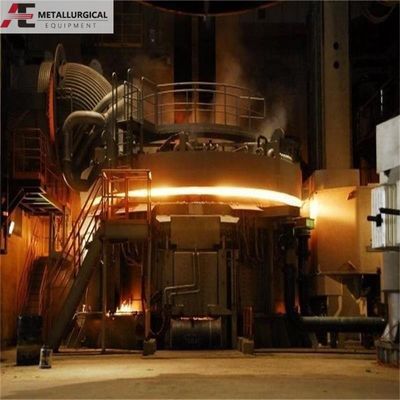
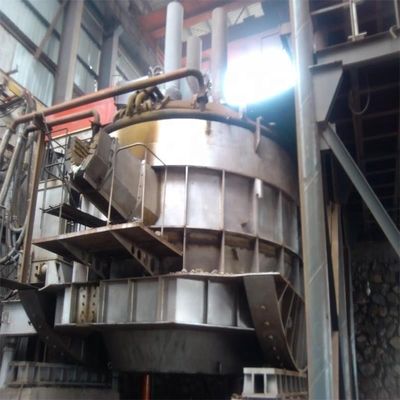
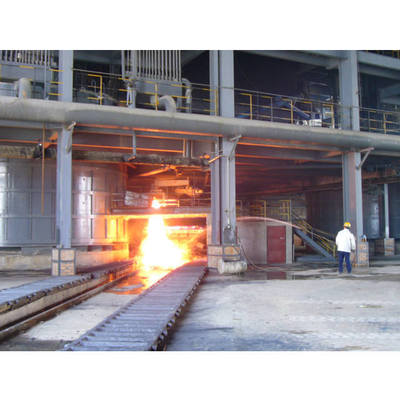
The Working Principle of Vacuum Consumable Arc Furnace
An arc represents a form of gas arc discharge, distinguished by an extremely low voltage between electrodes yet a substantial current traversing the gas. This phenomenon generates dazzling white light and an intense heat within the arc region, reaching temperatures around 5000K. The high current density arises from the emission of hot electrons from the cathode, coupled with spontaneous electron emission. Specifically, a layer of positive ions near the cathode establishes a potent electric field, prompting the cathode to emit electrons autonomously. These electrons collide with gas molecules between the electrodes, ionizing them and producing additional positive ions and secondary electrons. Under the influence of the electric field, these particles collide with the cathode and anode, resulting in high temperatures. The cathode's temperature remains lower than that of the anode due to energy expenditure in electron emission. Moreover, high temperatures also occur between the electrodes owing to the exothermic recombination of positive ions and electrons. Electric arc furnaces, which utilize this principle, are industrial furnaces employed for metal smelting. When operated in a vacuum environment, they are termed vacuum arc furnaces.
Vacuum arc melting operates under high current and low voltage conditions, characteristic of short arc operations. Typically, the arc voltage ranges from 22 to 65V, with corresponding arc lengths of 20 to 50mm (the latter for larger ingots). Since the successful platinum wire smelting experiment in 1839, people have embarked on over a century of research into smelting refractory metals. The vacuum arc furnace was officially introduced into industrial use in 1953. By 1956, titanium was smelted in non-consumable furnaces in the United States and several European countries, while steel was smelted in consumable furnaces in 1955. Around 1960, the weight of ingots produced by self-consumption furnaces exceeded 30 tons, marking a significant milestone. The current development can be exemplified by the vacuum self-consumption furnace manufactured by the American company Consarc. To enhance productivity and equipment utilization, two furnaces often share a main power supply, vacuum system, and automatic control system.
During the formation and descent of droplets at the electrode's lower end, specific physical and chemical reactions occur, facilitating the removal of some gas impurities. The vacuum consumable arc furnace is characterized by smelting within a water-cooled copper crystallizer, overcoming the drawback of metal contamination due to interactions with refractory materials. Under intense water cooling, the molten steel condenses and crystallizes, yielding steel ingots with uniform grain arrangements, no shrinkage cavities, and compact structures. The melting process within a vacuum consumable arc furnace is driven by a direct current (DC) low-voltage, high-current arc.
Initially, an arc plasma zone forms between the lower end of the consumable electrode and the crystallizer, as well as between the lower end of the consumable electrode and the molten pool. This zone exhibits extremely high temperatures, causing the extreme part of the consumable electrode to melt first. Non-metallic inclusions within the consumable electrode, such as oxides and nitrous compounds, disintegrate or are removed through carbon reduction under vacuum and high-temperature conditions, achieving further purification. Given the vacuum consumable arc furnace's ability to eliminate gas and non-metallic inclusions, along with some low-melting-point harmful impurities, the cold and hot processing capabilities, plasticity, mechanical properties, and physical properties are significantly enhanced. Particularly noteworthy is the improvement in the difference between vertical and horizontal properties, which is crucial for ensuring the stability, consistency, and reliability of material properties.
2. Electrical Equipment of Vacuum Consumable Arc Furnace
To produce high-quality spindles, stable smelting power is essential, necessitating a DC power supply with constant current characteristics.
- Constant Current Characteristics: The power supply maintains constant current within an operating voltage range of 20-40V, with a no-load voltage of approximately 70V.
- Current Regulation Range: The current can be adjusted within a 1:10 ratio.
- Fault Tolerance: If 10% of the silicon elements in each rectifier arm are damaged, the system will issue a signal but can continue operating at the rated current.
- Overload Capacity: The system allows for a 10% overload for 1 minute.
In summary, vacuum arc furnaces offer the following characteristics:
- Pollution-Free Smelting: In a vacuum state, no slag or other materials exist between the consumable electrode and the spindle, preventing contamination during remelting.
- Effective Degassing: The smelted metal is directly exposed to the vacuum, resulting in excellent degassing effects that effectively remove hydrogen, nitrogen, oxygen, and other gases.
- Pure Internal Structure: Non-metallic inclusions in the smelted metal, being lighter, float to the top of the molten metal, leading to a very pure internal structure of the spindle.
- Uniform Internal Structure: Rapid cooling in a water-cooled copper crucible results in a uniform internal structure of the spindle without segregation.
- High-Grade Alloy Steel Smelting: The vacuum state allows for the addition of a large amount of alloying agents, enabling the smelting of high-grade alloy steel.
- Enhanced Productivity: The short transition time from steel to steel improves equipment productivity and reduces production costs.
- We are a professional electric furnace manufacturer. For further inquiries, or if you require submerged arc furnaces, electric arc furnaces, ladle refining furnaces, or other melting equipment, please do not hesitate to contact us at susan@aeaxa.com


 Your message must be between 20-3,000 characters!