The Vacuum Electric Arc Furnace: Operation in a Vacuum Environment
An electric arc furnace operates by utilizing an arc discharge within a gaseous medium. This gas arc discharge is distinguished by several key characteristics: a low voltage between electrodes, a substantial current passing through the gas, a bright white light emission, and an extremely high arc temperature, approximately reaching 5000K. The immense current density observed in such discharges stems from two primary sources: thermionic emission from the cathode and spontaneous electron emission. Specifically, the presence of a positive ion layer adjacent to the cathode generates a potent electric field, prompting the cathode to actively emit electrons.
As these electrons collide with gas molecules near the electrode, they ionize them, leading to the generation of a significant quantity of positive ions and secondary electrons. Under the influence of the electric field, these charged particles collide separately with the cathode and anode, resulting in the generation of high temperatures. Notably, due to the energy expended in electron emission, the cathode typically maintains a lower temperature compared to the anode. Additionally, high temperatures can arise between the electrodes due to the combined heat release from positive ions and electrons.
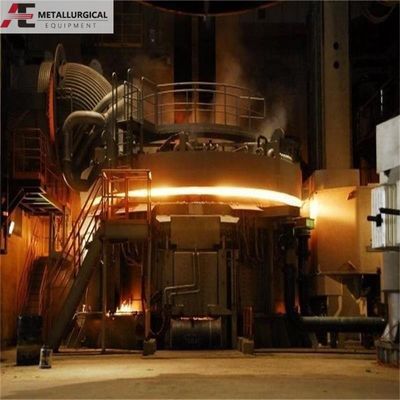
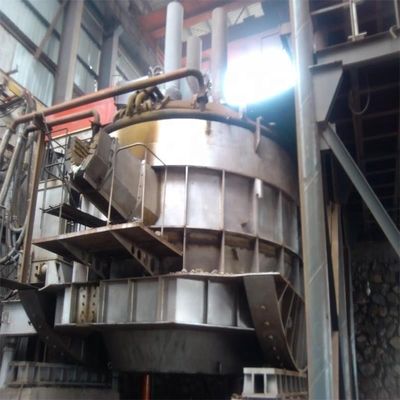
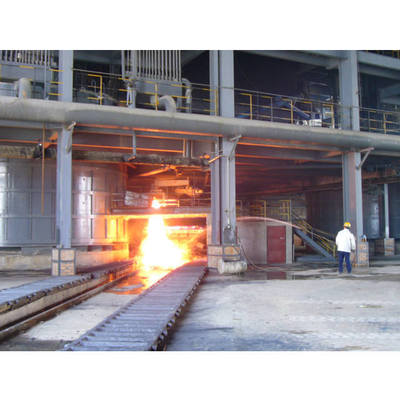
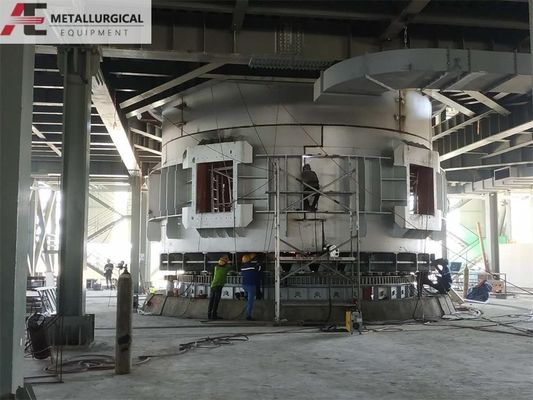
Vacuum arc furnaces are industrial furnaces that harness this principle for metal smelting. When an electric arc furnace operates within a vacuum environment, it is referred to as a vacuum electric arc furnace. The smelting process in a vacuum arc furnace involves high currents and low voltages, typically operating with a short arc. Generally, the arc voltage ranges from 22 to 65V, with a corresponding arc length of 20 to 50mm (the latter being applicable for large ingots).
Since the successful melting of platinum wire in 1839, researchers have dedicated the subsequent century to exploring the melting of refractory metals. In 1953, the vacuum electric arc furnace was officially introduced into industrial applications. Until 1956, titanium was smelted in non-consumable furnaces across the United States and much of Europe, while steel was smelted in consumable furnaces starting in 1955. By around 1960, the weight of steel ingots produced by self-consuming furnaces had exceeded 30 tons, marking a significant milestone in the development of this technology.
Currently, to enhance production efficiency and equipment utilization, both types of furnaces often share a common main power supply, vacuum system, and active control system. Vacuum heat treatment of workpieces (or materials) offers numerous advantages, including improved service life of components and molds, freedom from oxidation and decarburization, smooth surface finishes, minimal deformation, energy savings, environmental friendliness, and the ability to modify mechanical and metallurgical properties.
In summary, the vacuum electric arc furnace represents a sophisticated industrial tool that leverages the principles of gas arc discharge within a vacuum environment to achieve efficient and high-quality metal smelting and heat treatment processes.
We are a professional electric furnace manufacturer. For further inquiries, or if you require submerged arc furnaces, electric arc furnaces, ladle refining furnaces, or other melting equipment, please do not hesitate to contact us at susan@aeaxa.com


 Your message must be between 20-3,000 characters!