The Submerged Arc Furnace Process: An In-Depth Technical Overview
Process Overview
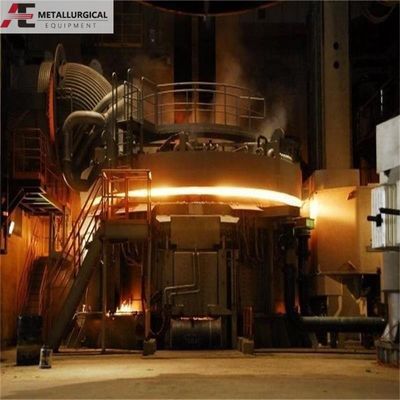
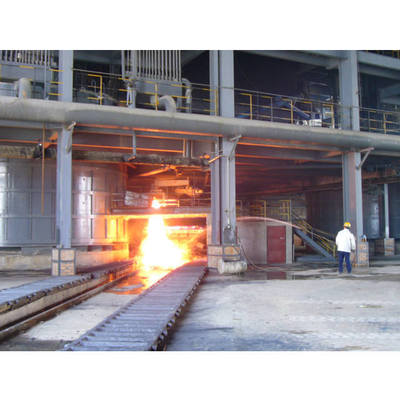
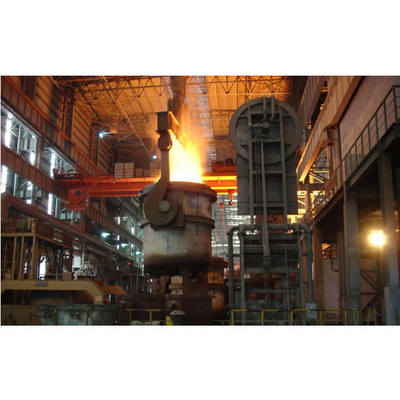
The submerged arc furnace (SAF) process is a sophisticated industrial method employed for smelting various materials. In this process, raw materials are intermittently fed into the furnace through a dedicated feeding device. A stoking machine ensures the material surface remains even, facilitating uniform heating and melting. As the process progresses, the liquid alloy generated flows into ladles or other containers, which are then transported to molds for casting. After cooling, the finished product is obtained. Concurrently, iron slag is intermittently discharged through a designated slag outlet, ensuring the purity of the alloy.
Main Equipment of Submerged Arc Furnace
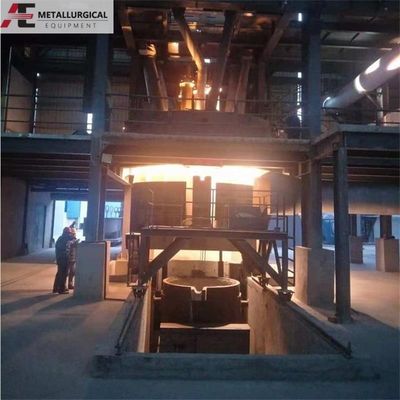
The SAF process is supported by a comprehensive suite of equipment, each playing a crucial role in the smelting operation. The primary components include the furnace body, furnace cover, short network, water cooling system, smoke exhaust system, dust removal system, waste heat treatment system, electrode shell, electrode pressing and lifting system, loading and unloading system, controller, burn-through device, hydraulic system, SAF transformer, and various electrical equipment.
Furnace Body
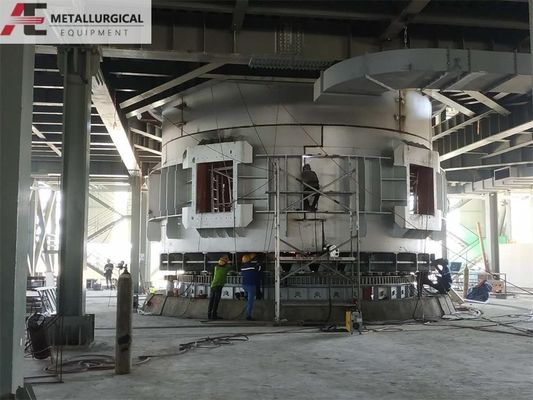
The furnace body is the core of the SAF, comprising a furnace shell and a refractory lining.
Furnace Shell
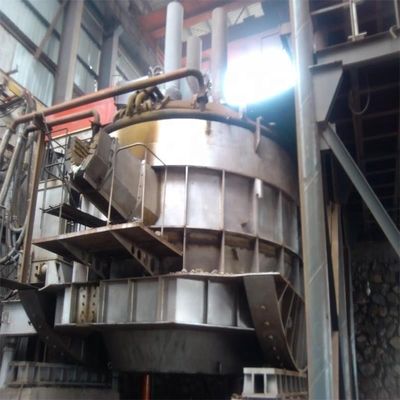
Constructed with a circular design, the furnace shell is made up of a bottom plate, wall plates, hoops, and rib plates. The side plates are fabricated from thick steel plates, supported by a channel steel frame mounted on concrete. This design ensures robustness and stability during operation.
Refractory Lining
The lining employs high-alumina, magnesia, and carbon refractory materials. Near the furnace outlet, first-grade magnesia bricks and magnesia materials are used, combined with carbonaceous silica bricks. The lining must withstand severe expansion due to heating, adapt to thermal expansion and cooling cycles, and be cost-effective and easy to manufacture. A tap hole is integrated into the furnace shell for slag discharge.
Furnace Cover
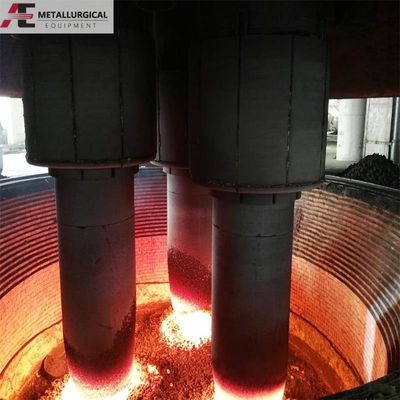
The sealed furnace cover is constructed with refractory bricks and materials, reinforced with water-cooled steel beams as a skeleton. Three electrode holes on the top allow the three-phase electrode holder to pass through, insulated with insulating materials. Nine thermometer sockets, inserted into refractory bricks with protective tubes, enable temperature measurement within the furnace.
Fume Hood
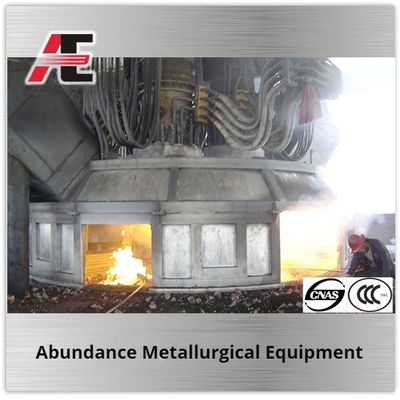
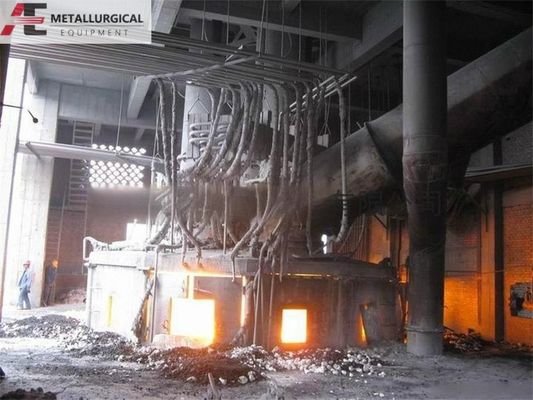
The fume hood encloses the furnace mouth, blocking radiant heat and collecting flue gas produced during smelting, thereby improving the operating environment. It consists of a cover plate, side walls, furnace door, and skeleton, forming a hexagonal shape through welding steel plates and profiles. It sits on the operating platform via the hood skeleton.
Flue Gas Outlet Pipe
The flue gas outlet pipe relies on natural pressure differences or a fan to create negative pressure, discharging smoke outward. Each electric furnace has two flues, made of steel plates and profiles, comprising a lower water-cooled section, flue pipe section, bell valve, and flue hanging. The water-cooled section, seated on the beam ring of the short smoke hood, is cooled by water. The smoke pipe section leads directly outside, with a bell valve controlled by a flue oil cylinder to open and close the flue. When the dust collector is connected, the bell valve closes, directing flue gas to the dust collector via a three-way under fan action.
Electrode Holder
The electrode holder is the heart of the SAF, comprising a conductive device, holding device, pressing and releasing device, lifting device, holding cylinder, and electrode shell. It ensures the copper tile adheres to the electrode shell under suitable pressure, allowing large currents from the short network to pass through the collector ring or support, then through the conductive copper tube to the electrodes.
Holding Cylinder
The holding cylinder, or electrode outer cylinder, suspends the electrode holder and electrode, enabling electrode lifting during operation.
Conductive Device
Traditional conductive devices include slip rings, conductive copper pipes, and copper tiles. The collector ring equalizes voltage, collects current, and distributes it to the conductive copper tube, ensuring each copper tile on each electrode receives equal current. The copper tile, cast with red copper and containing a cooling water pipe, has an allowable current density of 0.9~2.5A/cm² on its contact surface with the electrode. The electrode sintering belt is the weakest link in electrode strength, with the copper tile exerting a holding force of 0.05~0.15MPa on the electrode, derived from the electrode holder. Electrodes with combined holders enhance sintering.
Electrode Lifting Device
The electrode lifting device adjusts electrode position by lifting and lowering, regulating electrode arc length to adjust resistance and current size. The lifting speed varies with furnace power, typically ranging from 0.2~0.5m/min for electrodes over 1m in diameter and 0.4~0.8m/min for those under 1m. The lifting stroke is 2.1~2.6m.
Short Network System for Submerged Arc Furnace Process
The short network transmits low-voltage, high-current electrical energy, effectively inputting energy from the grid into the SAF. A reasonable short grid structure and appropriate current density selection significantly impact power operation indicators and economic efficiency in non-ferrous metal consumption.
Main Function and Requirements
The short network's primary function is to transmit large currents, with reactance and resistance accounting for a significant portion of the entire line, determining the equipment's electrical characteristics. It must meet the following basic requirements:
1. Sufficient current carrying capacity.
2. Minimized short-circuit resistance.
3. Small inductive reactance value.
4. Good insulation and mechanical strength.
Short Network Compensation
The SAF system generates 70% of its reactance through the short network, making it challenging to achieve a natural power factor above 0.85, with most furnaces operating between 0.7 and 0.8. This lower power factor reduces transformer efficiency, consumes useless work, wastes power, and incurs additional power fines. Manual electrode and stacking control increase three-phase power imbalance, reaching over 20%, leading to low smelting efficiency and high electricity costs. Balancing the power grid is crucial for reducing energy consumption and improving smelting efficiency.
High Voltage Power Supply System
The high-voltage power supply system comprises high-voltage incoming line isolating switches and voltage transformers, high-voltage vacuum circuit breakers and current transformers, zinc oxide arresters, and resistance-capacitance absorption protection devices, forming high-voltage incoming line cabinets, vacuum switch cabinets, oxidation arresters, and resistance-capacitance protection cabinets. It provides main power to the electric furnace and performs short-circuit protection. An overvoltage absorption device protects the transformer from operating and surge voltages, while the zinc oxide arrester offers lightning protection. The incoming line disconnect switch facilitates debugging and maintenance.
Cooling Water System
The water supply system delivers water to a high platform, where the water cooling system cools the short network, water-cooled hood, water-cooled chimney, pressure ring, copper tile, and water-cooled large jacket via a water distributor. Another pathway sends water to the transformer's strong oil water cooling device for transformer cooling.
Main Spare Parts
1. Refractory materials for furnace construction.
2. Electrode paste.
3. Transformer rails and fasteners.
4. Hydraulic medium.
5. Copper tile.
6. Water cooling cable.
This comprehensive overview of the submerged arc furnace process highlights its complexity and the critical role each component plays in ensuring efficient and effective smelting operations. For more professional information on smelting furnace equipment, please stay tuned to our website's news section.
We are a professional electric furnace manufacturer. For further inquiries, or if you require submerged arc furnaces, electric arc furnaces, ladle refining furnaces, or other melting equipment, please do not hesitate to contact us at susan@aeaxa.com


 Your message must be between 20-3,000 characters!