The Smelting Principle of Titanium Slag
1. Principle and Process Flow of Titanium Slag Smelting
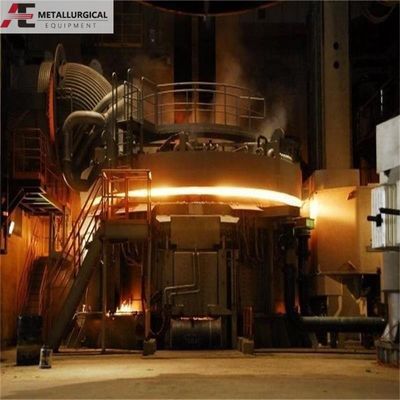
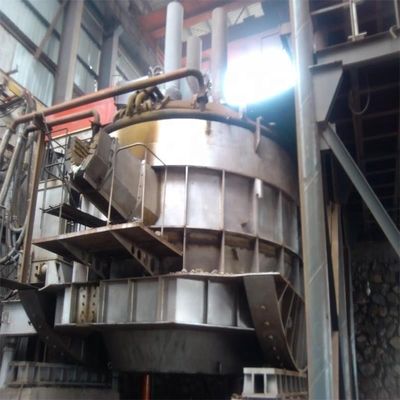
The core of electric furnace smelting for titanium slag involves mixing ilmenite with a solid reducing agent, such as anthracite (or petroleum coke or coke), and introducing the mixture into an electric furnace for reduction smelting. During this process, iron oxides within the ore are selectively reduced to metallic iron, while titanium oxides become enriched in the slag. After separating the slag and iron, titanium slag and by-product metallic iron are obtained. Titanium concentrate primarily consists of TiO₂ and FeO, with additional components like SiO₂, CaO, MgO, Al₂O₃, and V₂O₅. The smelting process entails reacting iron oxide with carbon under high-temperature, strongly reducing conditions to form molten titanium slag and metallic iron, which are then effectively separated due to differences in specific gravity and melting point. The chemical reactions involved include:
1. Fe₂O₃ + C = 2FeO + CO
2. FeO + C = Fe + CO
2. Main Features of Electric Furnace Smelting
Titanium slag is characterized by its high melting point, strong corrosiveness, high conductivity, and a sharp increase in viscosity near its melting point. These properties undergo significant changes with variations in composition during smelting.
2.1 High Conductivity and Open Arc Melting Characteristics
2.1.1 High Conductivity of Titanium Slag
Ilmenite exhibits substantial electrical conductivity in its molten state, ranging from 2.0 to 2.5 ks/m at 1500°C and increasing to 5.5 to 6.0 ks/m at 1800°C. As the reduction and smelting progress, the melt composition changes, leading to a decrease in FeO content and an increase in TiO₂ and lower-valent titanium oxides, which rapidly elevate conductivity. For instance, Canadian Sorel titanium slag has a conductivity of 15-20 ks/m at 1750°C, significantly higher than that of ordinary slag (100 s/m at the same temperature) and ionic electrolytes like liquid NaCl (about 400 s/m at 900°C). Temperature variations have minimal impact on titanium slag's conductivity, indicating its electronic conductor characteristics.
2.1.2 Open Arc Melting Characteristics
The high conductivity of titanium slag determines its open arc melting nature in electric furnaces, where the primary heat source is the arc heat between the electrode end and the molten pool surface, known as "open arc smelting." In contrast, high-resistance slag relies on slag heat resistance, termed "submerged arc melting." Initially, smelting titanium slag may exhibit short-term submerged arc characteristics, but as the process progresses, open arc smelting becomes dominant, with arc heat accounting for up to 97% in the later stages.
2.2 Effects of Melting Point and Viscosity on the Smelting Process
2.2.1 Melting Point
Titanium slag, primarily composed of titanium oxide, has a high melting point ranging from 1580 to 1700°C, increasing with TiO₂ content. High-temperature smelting necessitates concentrated heat in the reduction zone.
2.2.2 Viscosity
Titanium slag has a short slag characteristic, with low viscosity when fully melted above its melting point. However, viscosity sharply increases near the melting point due to a narrow crystallization temperature range, leading to the precipitation of crystalline solids that make the melt viscous, impairing slag fluidity and discharge.
2.3 High Chemical Activity and Furnace Impact
Titanium slag, mainly consisting of TiO₂ with considerable lower-valent titanium oxide, exhibits high chemical activity, corroding most metal and non-metal materials. To protect the furnace body, a layer of titanium slag is hung on the furnace lining during reduction smelting.
2.4 Boiling of Titanium Slag Melt
The reduction reaction primarily occurs on the melt surface, but sudden collapses of solid charges or descent of high-carbon iron through the melt can trigger violent reactions at the metallic iron-slag interface, generating large amounts of CO gas that cause slag boiling and splashing. This can submerge electrodes, increase instantaneous current, cause short circuits, and destabilize smelting. Continuous feeding and closed smelting methods can mitigate boiling and stabilize furnace conditions.
2.5 Effect of Impurity Elements
The melting point of titanium slag increases with TiO₂ content and reduction degree (Ti₂O₃/TiO₂ ratio). The optimal smelting endpoint is around O/Ti = 1.76, where the system has the lowest eutectic point. Impurity elements like FeO, MgO, CaO, MnO, and Al₂O₃ form binary compounds and eutectic points with TiO₂, lowering the melting point within certain content ranges, acting as good slag-forming agents. However, excessive impurities reduce titanium slag grade.
3. Main Process Conditions and Operations
3.1 Carbon Content
The theoretical carbon content, calculated based on converting all Fe₂O₃ to FeO, reducing 96% FeO to metallic iron, reducing 30% TiO₂ to Ti₃O₅, and accounting for 2% carburization of iron in the molten pool, is 7.98% of the added ore. Converted coke powder accounts for 9.85% of ore addition, with an actual carbon content of about 12%.
3.2 Electrical Parameters
Due to mismatches between the electric furnace and transformer and limited test furnaces, the current operating secondary voltage for smelting is set at 100V.
3.3 Smelting Operation
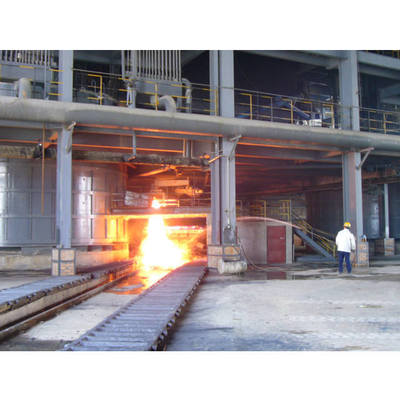
Each furnace is charged with 1.49 tons of titanium concentrate, with 0.78 tons added at once as a mixture with asphalt and coke powder and compacted. The remaining 0.71 tons is added intermittently during smelting through the electrode hole to adjust grade and avoid slag turning, crusting, and splashing. Each furnace smelts for 180 minutes, fluctuating between 150 and 240 minutes. Upon discharge, power is turned off, and oxygen is used to burn through the furnace mouth. Slag and iron are mixed and discharged into a slag tray, which has a φ100mm hole at the bottom for removal, taking 5 to 8 minutes. After solidification, molten iron is poured into a sand tray to form 80 to 90kg iron ingots. After discharge, the furnace outlet is plugged, and about 60kg of ore and 7kg of coke powder are added along the three electrode holes, followed by pounding, adding materials, tamping with a hammer, discharging electrodes, closing the switch, and sending power to smelt the next furnace. The power supply time for the second furnace is about 10 to 20 minutes.
4. Phase Structure of Titanium Slag and Titanium Ore
4.1 Phase Structure of Ilmenite
Ilmenite, with the chemical formula FeTiO₃ and a theoretical TiO₂ content of 52.6%, is commonly found as FeTiO₃ and weathered ilmenite in nature. Weathered ilmenite forms various physical phase compositions, such as brookite, modified brookite, white titanium, and rutile, with increasing weathering depth and TiO₂ content. During weathering, other oxide impurities form solid solutions with FeTiO₃, expressed by the general formula m((Fe,Mg,Mn).TiO₂).n((Fe,Cr,Al)₂O₃), where m + n = 1.
Titanium ore of mining value is divided into rock ore and placer. Rock ore, composed of ilmenite (FeTiO₃), has a TiO₂ content of about 45-53%, with iron in the form of FeO, a high FeO/Fe₂O₃ ratio, high MgO content, and dense mineral structure. Placer, formed from weathered rock ore, has a high Fe₂O₃ content, low FeO/Fe₂O₃ ratio, low impurity content, loose mineral structure, and a TiO₂ content of up to 95-100% in rutile ore.
4.2 Phase Composition of Titanium Slag
Titanium slag, formed after smelting ilmenite in an electric furnace, consists of two main phases:
·
90-95% Pseudo-Plate Titanium Phase: Composed of (FeTi₂O₅)a(MgTi₂O₅)b(Al₂TiO₅)c(MnTi₂O₅)d(V₂TiO₅)e(Ti₃O₅)f, also known as black titanite solid solution phase, where a + b + c + d + e + f = 1. For example, the typical composition of Sorel slag is (FeTi₂O₅)0.31(MgTi₂O₅)0.30(Al₂TiO₅)0.06(MnTi₂O₅)0.008(V₂TiO₅)0.012(Ti₃O₅)0.31.
·
·
5-10% Silicate Vitreous Phase: (Ca, Al, Mg, Fe, Ti)SiO₃, with a typical composition of SiO₂ 60%, Al₂O₃ 18-20%, CaO 9-10%, MgO 1-4%, FeO 2-4%, and TiO₂ 3-4%.
·
Titanium slag smelted by electric furnace is divided into acid-soluble titanium slag and titanium chloride slag. Acid-soluble titanium slag, smelted from Panzhihua titanium concentrate, is used for producing titanium dioxide by the sulfuric acid method and has the following characteristics:
1. Good acid solubility, with an acidolysis rate ≥94%.
2. Appropriate amounts of co-solvent impurities FeO and MgO for good acidolysis reaction performance.
3. Controlled lower-valent titanium content.
4. Impurities (sulfur, phosphorus, chromium, vanadium) harmful to titanium dioxide production must not exceed standards.
Titanium chloride slag, used for producing titanium dioxide by the chloride method, has the following characteristics:
1. High TiO₂ content, generally ≥92%.
2. CaO + MgO content, which forms adhesiveness during chlorination, generally ≤1%.
3. Particle size distribution meeting fluidization requirements.
We are a professional electric furnace manufacturer. For further inquiries, or if you require submerged arc furnaces, electric arc furnaces, ladle refining furnaces, or other melting equipment, please do not hesitate to contact us at susan@aeaxa.com


 Your message must be between 20-3,000 characters!