The Impact of Electric Arc Furnaces on Electrical Energy Efficiency
Electrical Environment and Operating Characteristics of Electric Arc Furnaces
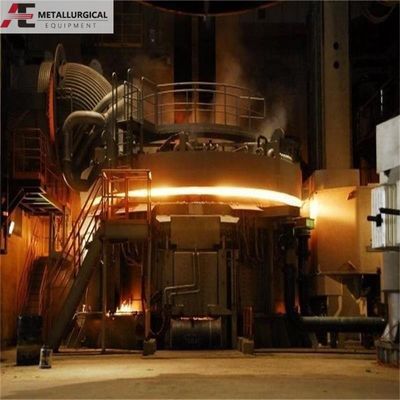
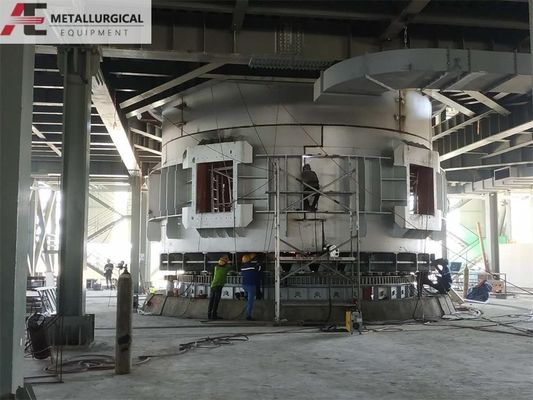
Electric arc furnaces (EAFs) used for smelting typically operate in three distinct stages:
1. Melting Phase: Initial melting of the solid charge, representing the period of highest energy demand.
2. Initial Refining and Heating Stage.
3. Refining Stage: Where energy input primarily compensates for thermal losses.
A standard AC electric arc furnace has a smelting cycle ranging from approximately 3 to 8 hours, dependent on power supply parameters, furnace capacity, and the specific smelting process. The melting period, lasting about 0.5 to 2 hours, presents a highly unbalanced three-phase impact load. During this phase, current is extremely unstable and power consumption is at its peak, accounting for roughly 60% to 70% of the total energy use. In contrast, voltage fluctuations and power consumption decrease significantly during the oxidation and reduction refining periods.
Key operational characteristics during scrap melting include:
Frequent arc extinction and re-ignition at the start of melting.
Continuous arc fluctuations throughout the melting period, leading to rapid current changes, material collapse, and short circuits.
The operating power factor for a standard EAF circuit typically ranges from 0.8 to 0.85, while for high-power furnaces it is lower, between 0.7 and 0.8. This lower power factor inherently results in reduced electrical efficiency.
Impact on Power Efficiency
Electrical energy waste in EAFs manifests primarily in two forms: a low power factor and the generation of significant flicker and harmonics during melting.
Flicker is a primary source of various side effects, including harmonic distortion and phase imbalances. It refers to transient distortions—such as surges, spikes, and harmonics—superimposed on the AC sine wave. As noted by prominent energy theorist Dr. Hersfield, the key characteristics of this distortion are ultra-high voltage, ultra-high speed, and ultra-high frequency.
Ultra-High Voltage: Flicker spikes can reach 2 to 50 times the normal voltage amplitude, potentially as high as 500 to 10,000 volts.
Ultra-High Speed: These spikes occur within an extremely brief duration, often completing their burst and decay within microseconds or nanoseconds.
Ultra-High Frequency: Flicker activity is incessant. Dozens of such events can occur from simple actions like switching on a light, starting an appliance, or even clicking a computer mouse, with associated voltages reaching 500-1200 volts.
The damaging effect of these high-voltage, high-frequency transients on sensitive electrical equipment is often overlooked. Furthermore, since electrical work is the product of current and voltage, instantaneous increases in either result in greater instantaneous power consumption.
The heating element of an EAF is a resistive load (the arc). Therefore, these instantaneous voltage or current spikes cannot contribute to arc initiation or heating. Instead, they are fed back as reactive power to inductive loads within the system, primarily the furnace transformer, where they dissipate as core and copper losses. This instantaneous reactive power consumption provides no benefit to the smelting process, yet its impact on overall efficiency has historically been underestimated in EAF operation.
Even disregarding the energy waste from the low power factor, the substantial flicker generated during the melting period alone indicates that the electrical efficiency of an EAF is lower compared to a smoothly operating device (with minimal flicker) of the same rated power.
Conclusion
Suppressing or reducing the magnitude and frequency of flicker transients generated during the EAF melting period, and converting this portion of ineffective power into useful active power, presents a significant opportunity. This approach can not only improve the electrical energy efficiency of the furnace and achieve substantial energy savings but also mitigate the furnace's adverse impact and pollution on the power grid, while offering protection to sensitive electrical equipment.
We are a professional electric furnace manufacturer. For further inquiries, or if you require submerged arc furnaces, electric arc furnaces, ladle refining furnaces, or other melting equipment, please do not hesitate to contact us at susan@aeaxa.com


 Your message must be between 20-3,000 characters!