Submerged Arc Furnace (SAF) Electrode Accident Analysis
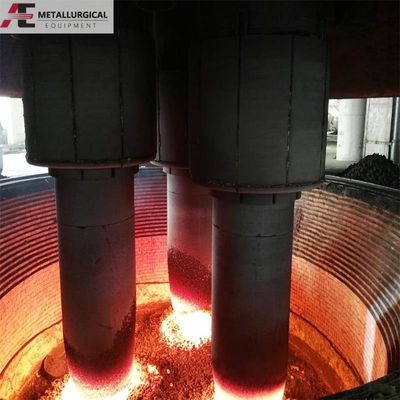
Electrode safety incidents represent a prevalent category of accidents within the nonferrous metals and calcium carbide industries, particularly in submerged arc furnace (SAF) smelting operations. A precise analysis of the root causes behind electrode accidents is crucial, as it enables the implementation of targeted preventive measures to mitigate their frequency. However, the analysis of electrode safety accidents is influenced by a myriad of factors from both electrode paste suppliers and application manufacturers. To accurately determine the cause of electrode safety accidents, mutual agreement on objective direct evidence is essential, with the electrode section of the submerged arc furnace serving as an excellent source of such evidence. Therefore, analyzing electrode sections holds significant practical importance.
1. Electrode Paste Shrinkage and Loosening Leading to Layered Stone and Granular Materials
Cross-Section Observation: The electrode's cross-section exhibits a distinct layer-by-layer shrinkage phenomenon characterized by granular matter. Depending on the size section of the electrode's combustion radiation source, granular materials may deposit either along the electrode's outer ring or in its center.
Additional Phenomena: The electrode paste's fluidity index exceeds 2.0, and elongation exceeds 40.
Root Cause: The electrode paste's excessive popularity causes particle shrinkage, reducing the strength of electrodes with more stones, making them susceptible to breakage under external forces. Thermal stress within the electrode further contributes to particle breakage. The two distinct stone accumulations result from varying sintering methods.
2. Excessive and Lengthy Bars in the Electrode Cylinder, Common in New Ignition Furnaces
Section Condition: The section opens in segments along the rib.
Additional Phenomena: Electrode paste inspection index values are normal, but post-ignition phenomena such as valve falling, bifurcation, and turning around are prevalent.
Root Cause: For newly ignited SAFs, issues typically stem from the electrode tube ribs. An excessive number, density, or length of ribs can segment the electrode paste into too many small pieces, reducing overall electrode strength. Incorrect or insufficient drilling on the ribs can also lead to electrode detachment and cracking.
3. Insufficient or Low Fluidity of Electrode Paste (Plasticity Value < 5%)
Section Condition: The section displays obvious cracks, vaguely revealing the electrode paste.
Additional Phenomena: The electrode paste's fluidity index is less than 1.0, and plasticity value is less than 2.0.
Root Cause: Poor fluidity in the electrode paste prevents it from filling the electrode cylinder's entire space, resulting in cracks and paste hanging, which diminishes the electrode's overall strength.
4. Melting of the Top Layer of the Paste Column
Section Condition: The section is loose and cracked, with some sections appearing leveled.
Additional Phenomena: Observations indicate that the top layer of the paste column melts into a viscous state, with boiler pipe blowing occurring from the top down to the paste addition time before electrode breakage. The extent of shrinkage and loosening in such electrode breaks depends on the normal circulation of the electrode paste itself.
Fundamental Cause: The high heat transfer coefficient of commonly used electrode paste raw materials in large and medium-sized SAFs causes the top layer of the paste column to melt easily. Prolonged furnace shutdowns lead to secondary coagulation of the melted top layer. If electrode paste is not added promptly, the entire electrode sintering process concludes. After secondary temperature rise, the electrode paste's popularity declines, reducing electrode strength and causing hard breaks.
5. Poor Thermal Shock Resistance of Electrode Paste
Section Condition: The section is leveled.
Additional Phenomena: Significant electric flow changes occur before electrode cutting, with all other parameters remaining normal.
Root Cause: Variations in current cause differential heating of electrode parts, inducing thermal stress. Weak thermal shock resistance in the electrode paste leads to cracks. Rapid sintering rates during electrode sintering also expand the temperature difference between the electrode's interior and exterior. Vertical cracks without bottom bifurcation generally indicate weak thermal shock resistance in the electrode paste.
6. Foreign Object Contamination
Cross-Section Condition: The section is leveled, with visible dirt.
Additional Phenomena: Dirt is present in the electrode paste during operation, the electrode cylinder lacks a cover, and the production workshop is filled with smoke and dust.
Root Cause: Contaminants block the conventional fluidity of electrode paste, preventing the sintering of dirty electrode sections into a cohesive whole. This reduction in electrode strength leads to cracks.
7. Soft Break of Black Core
Section Condition: The area near the electrode section is leveled, with the middle ring raised or lowered.
Additional Observations: Electrode sintering is slow, with all other parameters remaining normal.
Root Cause: Slow electrode sintering results in an unsintered core around the electrode of the kneader, while the sintered electrode has low strength, making it prone to breakage under significant external force impact.
8. Issues with Furnace Waste Material Preparation (Low Carbon Content and Slag Alkalinity)
Cross Section: The electrode experiences severe corrosion and bifurcation during operation, significantly narrowing from top to bottom.
Additional Phenomena: Electrode paste inspection is normal, but the heating furnace temperature is low, production is small, and the electrode is inserted too deeply.
Root Cause: Carbon deficiency in SAF waste materials leads to severe corrosion of dissolved materials on electrodes, reducing the overall strength of narrowed electrodes and making them prone to fracture under significant external force impact.
9. Poor Oxidation Resistance of Electrode Paste
Section Condition: The electrode significantly narrows, with severe side air oxidation.
Additional Phenomena: SAF operation is normal without water seepage, and centrifugal fan application remains unchanged without power failure.
Root Cause: Poor oxidation resistance in electrode paste leads to excessive air oxidation, narrowing the electrode and reducing its overall strength, making it prone to breakage under significant external force impact. The judgment of weak oxidation resistance and carbon deficiency-induced electrode corrosion is based on the electrode paste's narrower width under the material surface indicating carbon deficiency factors, while poor oxidation resistance is indicated when the material surface is narrower.
Submerged arc furnace electrodes are prone to numerous soft and hard breaking accidents, which are highly complex. Analyzing the cause of an accident solely from the cross-section is insufficient. Therefore, before conducting an in-depth analysis, it is essential to ensure that the electrode paste's inspection index values, particularly strength, meet standards. Only electrode paste with up-to-standard strength warrants further analysis of the electrode cross-section. The data provided by the electrode cross-section can objectively reflect the electrode's behavior during the entire sintering process, offering a method to analyze electrode safety accidents.
We are a professional electric furnace manufacturer. For further inquiries, or if you require submerged arc furnaces, electric arc furnaces, ladle refining furnaces, or other melting equipment, please do not hesitate to contact us at susan@aeaxa.com


 Your message must be between 20-3,000 characters!