Submerged Arc Furnace Graphite Electrode: A Comparative Analysis with Self-baking and Carbon Electrodes
Introduction
When it comes to submerged arc furnaces, the choice of electrodes plays a pivotal role in determining the efficiency and quality of the production process. Among the available options, submerged arc furnace graphite electrodes, self-baking electrodes, and carbon electrodes each have their unique characteristics and applications. This article delves into the specifics of submerged arc furnace graphite electrodes and compares them with their self-baking and carbon counterparts.
Submerged Arc Furnace Graphite Electrode: Applications and Characteristics
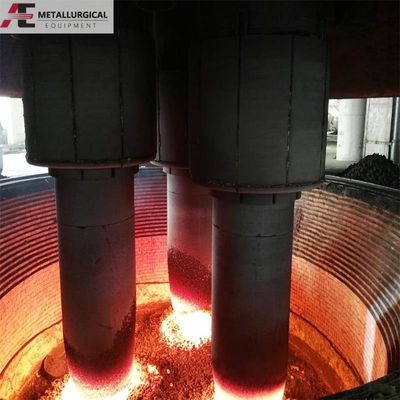
Submerged arc furnace graphite electrodes are predominantly utilized in the production of ferroalloys, pure silicon, yellow phosphorus, matte, and calcium carbide, among others. A defining feature of these electrodes is that their lower conductive sections are submerged within the charge. This arrangement results in heat generation not only from the arc between the electrode and the charge but also from the resistance of the charge as the current passes through it.
In terms of consumption, each ton of silicon production requires approximately 150 kg of graphite electrodes, while each ton of yellow phosphorus production consumes around 40 kg of graphite electrodes.
Electrode Types and Their Functions in Submerged Arc Furnaces
Electrodes serve the crucial function of conducting electricity and converting electrical energy into heat. Based on their uses and production processes, electrodes can be categorized into carbon electrodes, graphite electrodes, and self-baking electrodes.
In submerged arc furnaces, self-baking electrodes are often the preferred choice due to their cost-effectiveness. However, when producing ferroalloy products with lower carbon content, such as industrial silicon, graphite electrodes become necessary. The following sections elaborate on the differences among these three types of electrodes.
Carbon Electrodes: Composition and Production Process
Carbon electrodes are crafted from a blend of low-ash anthracite, metallurgical coke, pitch coke, and petroleum coke. These raw materials are combined in specific proportions and particle sizes. During the mixing process, binder pitch and tar are added, and the mixture is stirred evenly at an appropriate temperature. Subsequently, the mixture undergoes slow roasting in a roaster to form the final carbon electrode.
Submerged Arc Furnace Graphite Electrodes: Production and Graphitization
The production of submerged arc furnace graphite electrodes begins with carbon electrodes, using petroleum coke and pitch coke as primary raw materials. These carbon electrodes are then placed in a graphitized resistance furnace, where they are subjected to temperatures ranging from 2000 to 2500 ℃. Through this graphitization process, the carbon electrodes are transformed into graphite electrodes.
Self-baking Electrodes: Production Process and Continuous Use
Self-baking electrodes are manufactured using anthracite, coke, pitch, and tar as raw materials. These materials are combined at a certain temperature to form electrode paste, which is then placed into an electrode shell installed on the electric furnace. During the furnace's production process, as electric current passes through, Joule heat is generated, leading to self-sintering and coking within the furnace. This unique characteristic allows self-baking electrodes to be used continuously, sintering and forming simultaneously during use, and can be fired into large-diameter self-baking electrodes.
Comparative Analysis: Applications and Limitations
Self-baking electrodes, with their simple manufacturing process and low cost, find widespread application in the production of ferroalloys. They are commonly used to produce ferrosilicon, silicon-chromium alloy, silicon-manganese alloy, high-carbon ferromanganese, medium- and low-carbon ferromanganese, high-carbon ferrochromium, medium- and low-carbon ferrochromium, silicon-calcium alloy, ferrotungsten, and more.
However, self-baking electrodes are prone to carbonizing the alloy, and the iron sheet of the electrode shell can easily introduce iron into the alloy. Consequently, for the production of iron alloys and pure metals with extremely low carbon content, such as micro-carbon ferrochromium, industrial silicon, silicon-aluminum alloy, and metal manganese, carbon electrodes or submerged arc furnace graphite electrodes are preferred.
In conclusion, the choice between submerged arc furnace graphite electrodes, self-baking electrodes, and carbon electrodes depends on the specific production requirements, cost considerations, and desired product quality. Understanding the unique characteristics and applications of each electrode type is essential for optimizing the submerged arc furnace production process. We are a professional electric furnace manufacturer. For further inquiries, or if you require submerged arc furnaces, electric arc furnaces, ladle refining furnaces, or other melting equipment, please do not hesitate to contact us at susan@aeaxa.com


 Your message must be between 20-3,000 characters!