Pricing Factors for Submerged Arc Furnaces
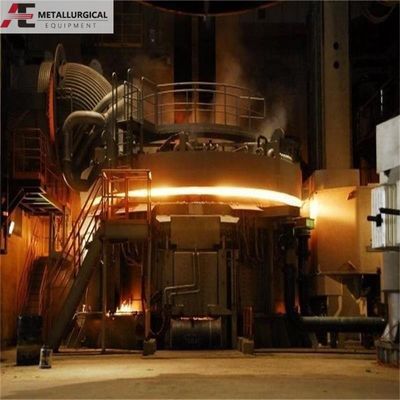
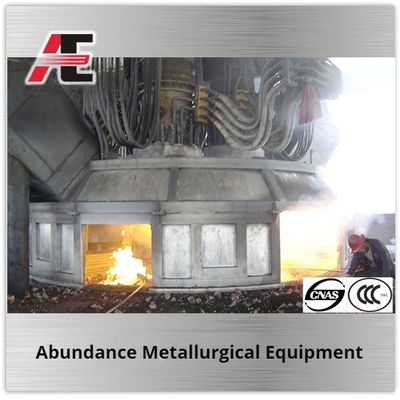
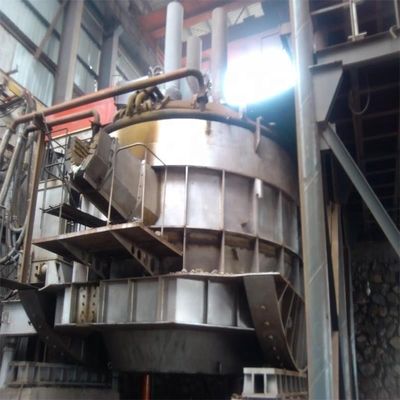
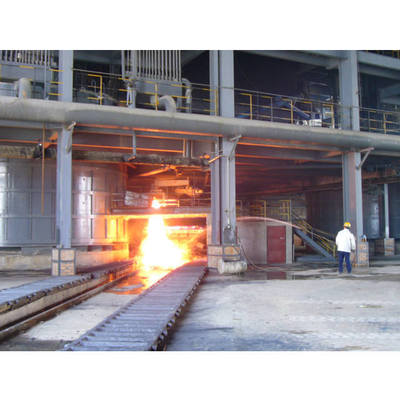
The pricing of submerged arc furnaces is influenced by their specific configurations. In this context, we focus on a semi-enclosed fixed submerged arc furnace equipped with a low hood.
1. Core Components Influencing Pricing
1.1 Furnace Body
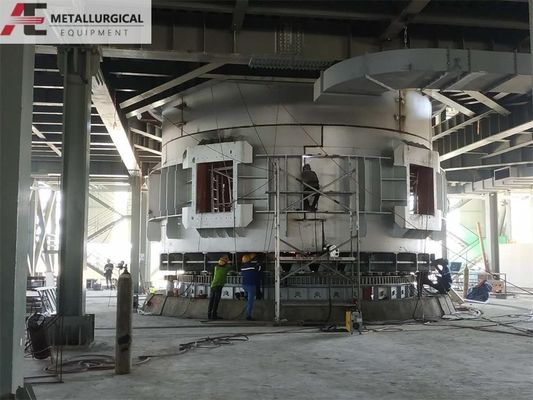
The furnace body comprises the furnace shell, lining, and bottom support. The shell, a cylindrical structure welded from 14-18mm thick steel plates, features external reinforcing ribs for added strength. The bottom is constructed from 18-20mm thick steel plates and supported by 25-30 I-beams. Natural ventilation cools the bottom, while the shell includes 1-2 discharge ports. The lining consists of high-alumina refractory bricks and self-baking carbon bricks, with a wall thickness of 460-690mm and an external 20mm thick aluminum silicate fiber plate. The carbon brick thickness at the bottom ranges from 800-1200mm. The furnace mouth is lined with silicon carbide corundum bricks, and the flow chute is water-cooled. Water-cooled furnace doors can be added as needed, with pricing varying based on the number of doors.
1.2 Low Smoke Hood
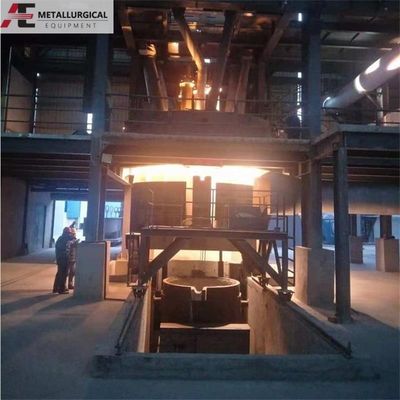
The hood can be fully water-cooled or feature a composite structure combining a water-cooled skeleton with heat-resistant concrete. The fully water-cooled version includes a framework, cover plate, wall, and enclosure, all made from water-cooled components. The framework, constructed from 16-20 channel steel, features a non-magnetic stainless steel plate around the three-phase electrodes and Q-235 steel plates for the outer cover and coaming. It includes a pole center circle adjustment device, three-phase electrode water-cooled protective sleeves, and insulation sealing devices. The composite structure uses a metal component column to support the side wall, which is cooled by water and built with refractory bricks. It has three operation doors on the side wall, with horizontal rotation for the large furnace surface opening. Two smoke vents on the top connect to vertical cooling elbow flue pipes leading to the chimney or dust removal device.
1.3 Short Network System
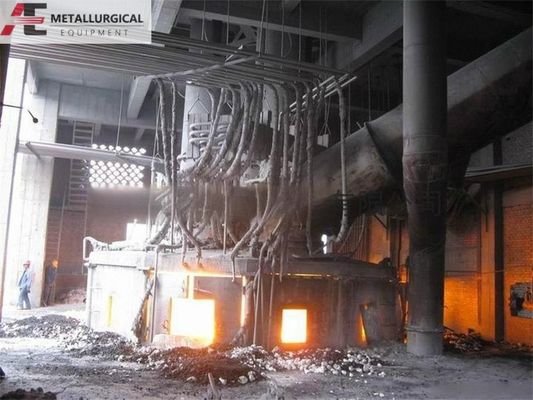
The short network system includes water-cooled compensators, copper pipes, cables, conductive copper pipes, copper tiles, and their hanging, fixing, and connecting devices at the transformer end. The layout can be regular or inverted triangles, aiming to minimize distance and impedance to maximize active power. Thick-walled copper pipes are used for water-cooled and conductive components, with each phase connected in reverse parallel to offset mutual inductance. The middle copper tube is connected by a water-cooled cable, allowing cooling water to flow directly to the copper tile and back out, reducing heat loss and improving active power. This setup also reduces investment costs, contributing to an economical furnace price.
1.4 Electrode System
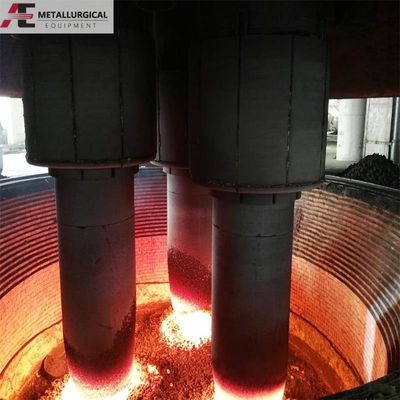
The electrode system comprises a holder cylinder, copper tile hanger, pressure ring, water-cooled jacket, electrode lifting device, and electrode pressure relief device. Advanced technologies from Demark and South Africa's PYROMET are employed. The electrode lifting device, with hanging oil cylinders, allows flexible, reliable, and precise electrode positioning. The system includes three sets, each with an electrode cylinder, holding cylinder, protective sleeve, pressure ring, and 6-8 copper pads. The holder secures the self-baking electrode, while the protective sleeve, pressure ring, and copper bushing are hung and fixed in order. Each electrode has 6-8 copper bushings, ensuring balanced gripping force and good contact conductivity. The holder is connected to two lifting oil cylinders, with adjustable polar circles on the steel platform. Each electrode has an automatic pressing and releasing device, using airbag holding brakes for holding and releasing the electrode alternately during pressure release.
1.5 Cooling Water System
The cooling water system cools components like the short network, pressure ring, protective jacket, furnace shell, smoke hood, and chimney. It includes a water separator, water collecting tank, pressure gauge, valve, pipe, rubber pipe, and joint. The short network's pressure ring water circuit has a drainage device for quick maintenance and emergency repairs. Cooling water requirements specify soft water with an inlet temperature ≤ 30℃ and outlet temperature ≤ 50℃.
2. Main Electrical Equipment Affecting Pricing
2.1 Transformer
A low-loss, energy-saving shell-type submerged arc heat transformer is used, featuring on-load electric voltage regulation, strong circulation, oil-water cooler, and an impedance voltage of 4-6%. The primary side voltage ranges from 35-110KV, with 5-27 secondary side voltage levels (varying based on transformer capacity and smelting type, affecting furnace price). The first few levels are constant power, and the last few are constant current, with an overload capacity >25% and side outlet pipe connection.
2.2 High Voltage Power Supply System
The system is fed by 35KV (or 110KV) through a transformer disconnector and vacuum breaker to the furnace transformer. Harmonic absorption devices and primary compensation can be designed per user requirements.
2.3 Voltage Power Supply System
A power transformer sends power to the main room's power cabinet and to the water pump, transformer, voltage regulator, power control, PLC power, hydraulic station, and air compressor room. Secondary compensation can be added for low voltage.
3. Auxiliary Equipment and Services
3.1 Feeding System Equipment
Options include belt feeding, single bucket elevator feeding, bucket elevator, hopper, material tank, and single beam electric hoist feeding. A distribution trolley, steel silo, blanking pipe, electromagnetic vibration feeder, automatic gate valve, and blanking pipe can also be chosen.
3.2 Discharge Equipment
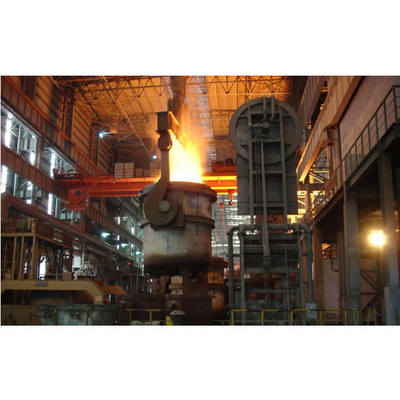
Includes ladle, ladle gantry hook, ladle car, and ground winch.
3.3 Casting Equipment
Ingot molds are used for casting.
3.4 Other Equipment
Furnace rammers, feeders, burn-through devices, dedusting equipment, and high voltage compensation with secondary low voltage compensation (optional) are also available.
Comprehensive Services
Our company offers engineering consulting, equipment design, system integration, material and equipment supply, EPC general contracting, process management services and training, project management, and production and operation services. With an expert team of over 60 people and more than 300 engineers and professional technicians in green steelmaking and ferroalloy smelting, we boast over 20 years of experience and various qualifications, including metallurgical engineering design, metal materials engineering design, and ISO9001 certification.
We are a professional electric furnace manufacturer. For further inquiries, or if you require submerged arc furnaces, electric arc furnaces, ladle refining furnaces, or other melting equipment, please do not hesitate to contact us at susan@aeaxa.com


 Your message must be between 20-3,000 characters!