Ladle Furnace Steelmaking Process
1. LF Ladle Furnace Steelmaking Process Overview
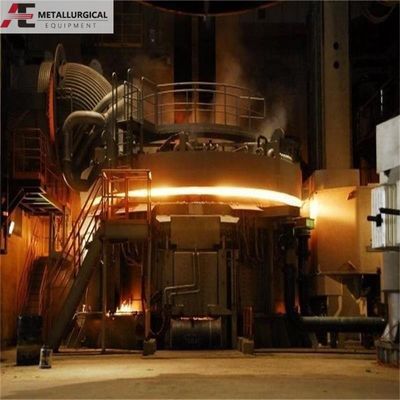
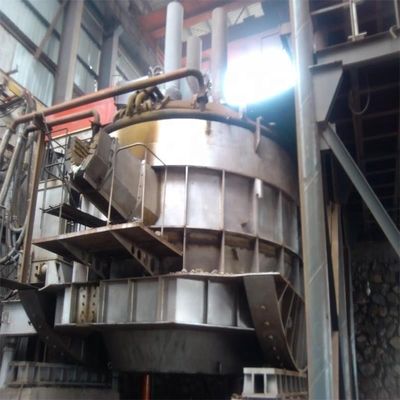
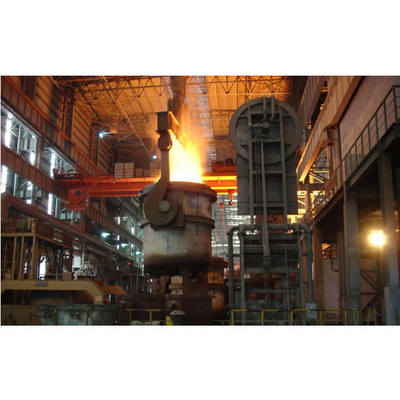
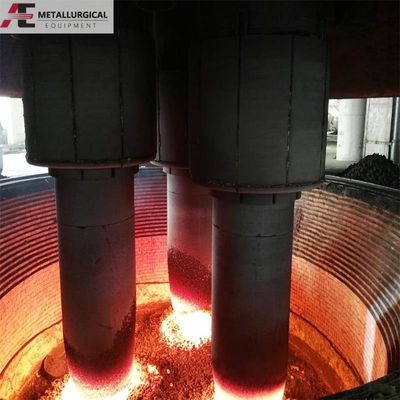
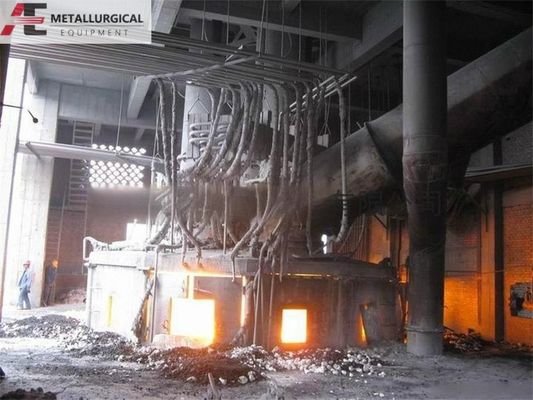
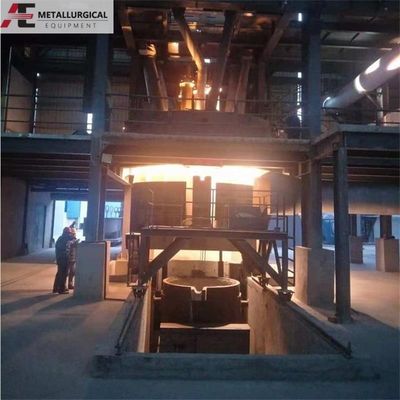
The LF (Ladle Furnace) steelmaking process involves transferring molten steel in its final oxidation stage from a converter or electric furnace into an LF furnace. Here, 50-90% of the oxidized slag is removed, and reducing slag along with a deoxidizer are added for reduction refining. By appropriately increasing stirring time, slag quantity, and stirring power during heating, and achieving complete slag removal during tapping, the sulfur content in the steel can be further reduced to less than 30 ppm for sulfur ([%S]) and less than 20 ppm for oxygen ([%O]), resulting in clean steel.
2. LF Refining and Deoxygenation
Solubility and Impact of Oxygen
Oxygen has limited solubility in both liquid and solid steel, with significantly lower solubility in solid steel. In the LF refining process, molten steel from primary smelting often exhibits strong oxidizing properties, posing challenges for deep deoxidation and desulfurization tasks. The hazards of oxygen are manifold:
-
Desulfurization Limitation: High oxygen content or slag oxygen potential affects sulfur distribution between steel and slag, reducing interfacial tension and influencing the character and quantity of sulfur-containing non-metallic inclusions. Effective desulfurization necessitates prior deoxidation.
-
Carbon Reoxidation: As molten steel cools and crystallizes, [C] and [O] segregate, leading to carbon reoxidation and the formation of CO gas bubbles. These bubbles compromise steel compactness, causing defects like porosity and looseness.
-
Non-Metallic Inclusions: Precipitated oxygen reacts with elements like Si, Mn, and Al during solidification, forming non-metallic inclusions that contribute to hairline defects in high-quality steel and degrade various performance indicators such as proportional limit, impact energy, elongation, and magnetic permeability.
-
Synergistic Effect with Sulfur: Oxygen exacerbates sulfur's harmful effects by forming low-melting eutectics with FeO and FeS, deteriorating steel plasticity or causing hot working damage.
Deoxygenation Methods
In the LF process, precipitation deoxidation and diffusion deoxidation are commonly employed:
-
Precipitation Deoxidation: This involves directly adding a bulk deoxidizer to molten steel after removing oxidized slag. The deoxidizing elements react with dissolved oxygen to form stable compounds that separate from the molten steel and enter the slag. Composite deoxidizers containing Al and alkaline earth elements are widely used due to their ability to form low-melting-point composite deoxidation products that facilitate inclusion flotation and removal.
-
Diffusion Deoxidation: Here, a powdery deoxidizer is added to the slag surface, where the deoxidation reaction occurs at the steel-slag interface. By reducing (FeO) content in the slag, oxygen in the molten steel diffuses into the slag, thereby lowering the steel's oxygen content.
3. LF Refining Desulfurization
Sulfur is generally considered a harmful element in steel, affecting its quality in multiple ways. Desulfurization is thus a critical metallurgical task in steelmaking. The LF furnace provides favorable thermodynamic and kinetic conditions for desulfurization, making it significant for low-sulfur steel production.
Desulfurization Reactions
Unlike alkaline oxidizing slag desulfurization, LF alkaline reducing slag desulfurization follows these reactions:
- [FeS] + (CaO) = (CaS) + (FeO)
- [MnS] + (CaO) = (CaS) + (MnO)
Since most sulfur in steel exists as [FeS], the primary desulfurization reaction is based on the first equation. Desulfurization efficiency depends on slag basicity, (FeO) and (MnO) content, slag quantity, and fluidity.
Factors Influencing Desulfurization
- Slag Basicity: Within a certain range, increasing slag basicity enhances sulfur distribution but may deteriorate kinetic conditions beyond a certain point.
- Reducing Atmosphere: LF refining operates under a reducing atmosphere, with high-basicity reduced slag favoring desulfurization.
- Slag Quantity and Fluidity: Adequate slag quantity and fluidity promote slag-steel reactions and desulfurization. However, excessive slag increases layer thickness, hindering desulfurization and inclusion flotation, while raising production costs.
4. Removal of Inclusions
Argon blowing at the ladle bottom is a crucial step before continuous casting, significantly impacting molten steel and slab quality. During molten steel movement, inclusions collide, condense into larger particles, and float up due to buoyancy (some adhere to bubble surfaces and rise with bubble buoyancy).
Inclusion Removal Process
The inclusion removal process via bubbles involves several steps:
- Bubbles approach and collide with inclusions.
- A liquid film forms between bubbles and inclusions.
- Inclusions oscillate or slip along bubble surfaces.
- The liquid film is expelled and ruptures, forming a dynamic three-phase contact nucleus (TPC).
- Stabilization of bubble/inclusion nuclei.
-
| Contact Person : |
Miss. Susan |
| Tel : |
+86-13991372145 |


 Your message must be between 20-3,000 characters!