Introduction to Ladle Refining
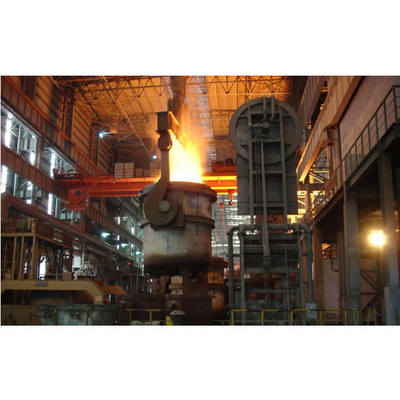
Out-of-furnace refining has revolutionized traditional steelmaking by dividing it into two distinct steps. The initial step, known as primary smelting, encompasses melting, dephosphorization, decarburization, and primary alloying of the charge within an oxidizing atmosphere. The subsequent step, refining, takes place in either a vacuum or an inert atmosphere, where deoxidation, desulfurization, inclusion removal, inclusion modification, precise composition adjustment, and molten steel temperature control are carried out under a controlled atmosphere. Since the 1960s, a variety of out-of-furnace refining methods have emerged sequentially, and this technology has witnessed rapid global development.
Out-of-furnace refining has become an indispensable component of the modern steel production process. In particular, the integration of out-of-furnace refining with continuous casting serves as a crucial approach to ensure the seamless operation of continuous casting, expand the range of continuous casting products, and enhance slab quality.
In the steelmaking production process, the sequence of converters (or electric furnaces) followed by out-of-furnace refining and then continuous casting has become a prevalent mode of technological transformation in steel plants.
The processes of various out-of-furnace refining methods vary, yet they share common features: an ideal refining atmosphere, such as vacuum, inert gas, or reducing gas; the use of electromagnetic force or the blowing of inert gas to stir the molten steel; and the application of heating methods like arc, plasma, or chemical methods to compensate for temperature losses during the refining process.
Ladle refining, when combined with continuous casting, aims to improve the quality of the cast billet and ensure the stability of the continuous casting process. Selecting an appropriate out-of-furnace refining method is a vital means of preparing molten steel for continuous casting and providing molten steel of qualified quality.
For this reason, when selecting ladle refining equipment based on product quality requirements, the following basic criteria should be met:
- Adjust the temperature of the molten steel to reach the pouring temperature range required by continuous casting.
- Enhance the cleanliness of the molten steel, particularly by reducing the content of large inclusions in the steel.
- Decrease the gas content in the steel, such as hydrogen and nitrogen levels.
- Reduce the content of harmful impurities in the steel, such as sulfur and phosphorus.
- Homogenize the temperature and composition of the molten steel and fine-tune the composition to achieve a very narrow chemical composition range for the finished steel.
- Modify the shape and composition of inclusions in the steel to improve the fluidity of the molten steel.
- Alleviate the smelting load of the steelmaking furnace, shorten the smelting cycle, and boost productivity.
- Enable the ladle refining furnace to act as a "buffer" between the steelmaking furnace and the continuous casting machine, balancing the production rhythm between the two and thereby enhancing the productivity of the continuous casting machine.
- We are a professional electric furnace manufacturer. For further inquiries, or if you require submerged arc furnaces, electric arc furnaces, ladle refining furnaces, or other melting equipment, please do not hesitate to contact us at susan@aeaxa.com


 Your message must be between 20-3,000 characters!