Difference between Submerged Arc Furnace and Electric Arc Furnace
What Sets Submerged Arc Furnaces and Electric Arc Furnaces Apart?
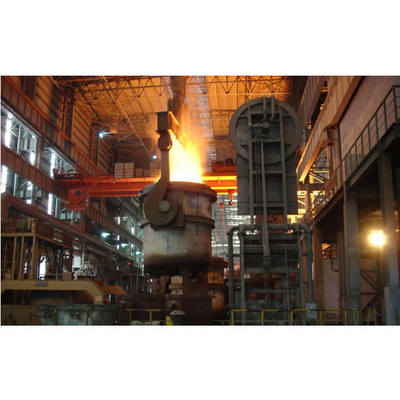
An electric arc furnace is a type of power - frequency electric furnace that utilizes electric arc energy for metal smelting. In industrial applications, electric arc furnaces can be classified into three main types:
1. Direct - Heating Type
In this type, the electric arc occurs between a special electrode rod and the molten furnace charge. The furnace charge is directly heated by the electric arc. This method is mainly used for steelmaking and is also applicable for smelting iron, copper, refractory materials, and refining liquid steel.
2. Indirect - Heating Type
Here, the arc is generated between two special electrode rods. The furnace charge is heated through the radiation of the arc. This approach is commonly used for smelting copper and copper alloys.
3. Submerged Arc Furnace
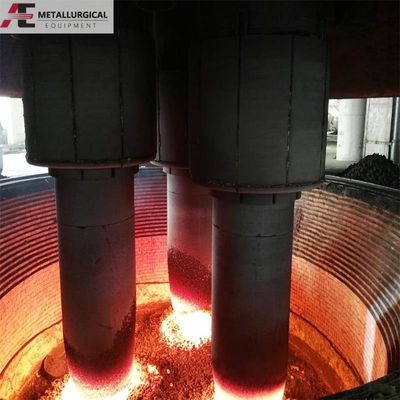
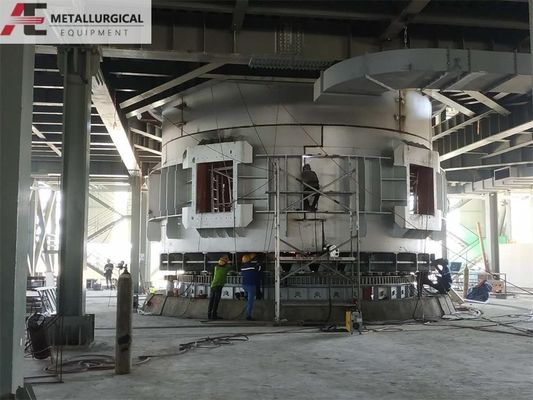
A submerged arc furnace uses high - resistivity ores as raw materials. During operation, the lower part of the electrode is generally buried in the furnace charge. Its heating principle involves not only the heat generated by the resistance of the charge as the current passes through but also the heat produced by the arc between the electrode and the charge. It's worth noting that a submerged arc furnace is actually a subtype of electric arc furnaces.
1. Nature
(1) Electric Arc Furnace
An electric arc furnace is an electric furnace that melts ores and metals using the high temperature generated by electrode arcs. It is an industrial furnace that produces electric arc heating through metal or non - metal electrodes. Electric arc furnaces can be further divided into three - phase electric arc furnaces, consumable electric arc furnaces, single - phase electric arc furnaces, and resistance electric arc furnaces.
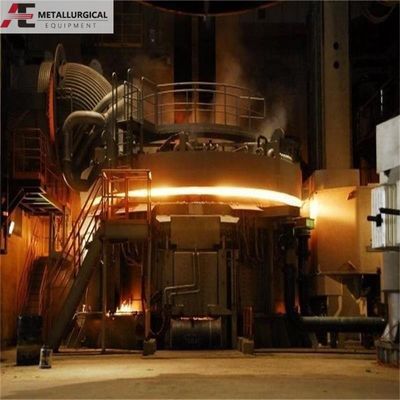
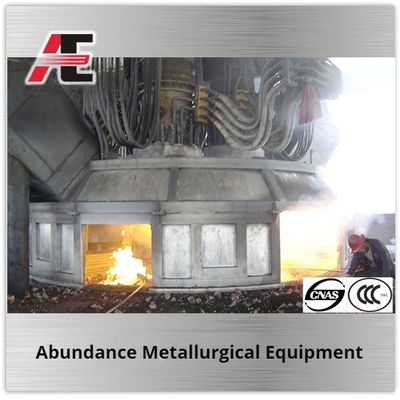
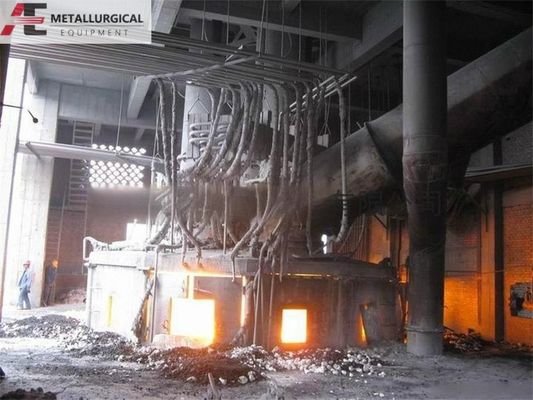
The furnace body of an electric arc steelmaking furnace consists of a furnace cover, furnace door, tapping trough, and furnace stack. The furnace bottom and furnace wall are constructed using alkaline or acid refractory materials. Electric arc steelmaking furnaces are categorized into ordinary - power, high - power, and ultra - high - power electric arc furnaces based on the transformer capacity allocated per ton of furnace capacity.
In electric arc furnace steelmaking, electric energy is input into the furnace through graphite electrodes, and the electric arc between the electrode end and the furnace charge serves as the heat source. Since it uses electric energy as the heat source, it can adjust the atmosphere inside the furnace, which is highly beneficial for smelting steel grades containing more easily oxidized elements. Shortly after its invention, electric arc furnace steelmaking was used for smelting alloy steel and has since experienced significant development.
With the improvement of electric arc furnace equipment and smelting technology, along with the development of the electric power industry, the cost of electric arc furnace steelmaking has continued to decline. Currently, electric arc furnace steelmaking is not only used for producing alloy steel but also for manufacturing a large quantity of ordinary carbon steel. Its output is increasing proportionally to the total steel output in major industrial countries.
(2) Submerged Arc Furnace
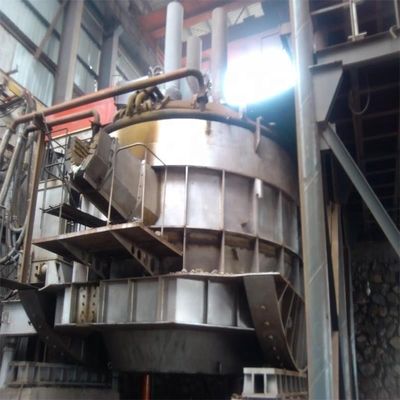
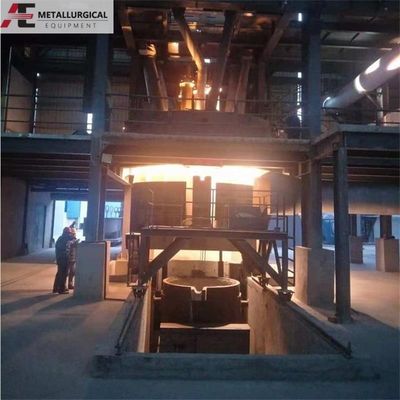
A submerged arc furnace is also an industrial electric furnace with extremely high power consumption. According to its structural and working characteristics, 70% of the system reactance of a submerged arc furnace is generated by the short - network system, which is a large - current working system with a maximum current that can reach tens of thousands of amperes. Therefore, the performance of the short network largely determines the performance of the submerged arc furnace.
The natural power factor of a submerged arc furnace is difficult to exceed 0.85, and for most furnaces, it ranges between 0.7 and 0.8. A low power factor not only reduces the efficiency of the transformer and consumes a large amount of useless power but also incurs additional power fines from the power department. At the same time, due to manual electrode control and the stacking process, the power imbalance among the three phases increases, with a maximum imbalance of over 20%. This leads to low smelting efficiency and higher electricity costs.
Improving the power factor of the short grid and reducing grid imbalance are effective ways to reduce energy consumption and enhance smelting efficiency. By taking appropriate measures to improve the short - network power factor, power consumption can be reduced by 5 - 20%, and yield can be increased by more than 5 - 10%. This brings significant economic benefits to enterprises, and the transformation costs can be recovered in the short to medium term through saved electricity costs.
In a submerged arc furnace system, short - network losses account for over 70% of the system's own losses. Since the short network is a large - current operating system with a maximum current of tens of thousands of amperes, its performance is crucial. If proper measures are taken to improve the short - network power factor and electrode imbalance, production power consumption can be reduced by 3 - 6%, and product output can be increased by 5 - 15%.
In China, to address the issue of low natural power factors in submerged arc furnaces, the method of reactive power compensation on the high - voltage side is mostly adopted. However, high - voltage compensation only improves the power factor on the high - voltage side. The reactive power generated by the huge inductive reactance still flows in the short - grid system, and the three - phase imbalance is due to the strong phase of the short grid (the short grid is short, so the inductive reactance is small, resulting in low losses and high output). Therefore, high - voltage compensation cannot solve the problem of three - phase balance or achieve the effect of offsetting the reactive power of the short - line system and improving the power factor on the low - voltage side. Since more than 70% of the power supply is on the low - voltage side, it cannot reduce low - voltage side losses or increase transformer output, although it can avoid fines, which is only meaningful to the power supply department.
Compared with high - voltage compensation, low - voltage compensation has the following advantages in addition to improving the power factor:
· Increased Utilization Rate: It improves the utilization rate of transformers and high - current lines, increasing the effective input power for smelting. For arc smelting, reactive power is mainly generated by the arc current. Moving the compensation point forward to the short grid compensates for the large reactive power consumption of the short grid on - site, increasing the input voltage of the power supply, transformer output, and smelting effective input power. The melting power of the material is a function of the electrode voltage and the material - specific resistance (P = U²/Z material). As the transformer's load capacity improves, power input to the furnace increases, leading to increased production and reduced consumption.
· Balance Compensation: It compensates for unbalance and improves the strong and weak phase conditions of the three phases. Due to the unbalanced layout of the three - phase short grid, furnace body, and charge, different voltage drops and powers among the three phases lead to strong and weak phases. Using single - phase parallel connection for reactive power compensation comprehensively adjusts the compensation capacity of each phase, improving the power density of the furnace core and the uniformity of the crucible, ensuring consistent effective working voltage of the three - phase electrodes, balanced electrode voltage, three - phase feed, and three - phase electrodes, achieving the goal of increasing production and reducing consumption. It also improves the three - phase unbalance phenomenon, the furnace's working environment, and the furnace's service life.
· Harmonic Reduction: It reduces high - order harmonics, minimizing the harm of harmonics to the entire power supply equipment and reducing additional losses of transformers and networks.
· Improved Power Quality: It enhances power quality, improves the electrical parameters of the system, and upgrades product quality.
However, traditional compensation switching technologies (such as switching with an AC contactor) have a high number of switching switches and high costs. Moreover, the harsh working environment significantly affects their service life, making it difficult for the low - voltage compensation of the switching method to exceed one year in service life. This brings a lot of maintenance work to enterprises and prolongs the investment recovery period. Due to high follow - up maintenance costs, the overall benefit is not good.
The BWKN - 3500 type reactive power compensation controller (special type for submerged arc furnace short network) is a reactive power compensation controller specially developed and designed to adapt to the working characteristics of submerged arc furnaces. It has the ideal function of improving power quality, mainly including improving the power factor of a submerged arc furnace, saving energy, providing voltage support, and reducing flicker. Its salient features are as follows:
· Separate Three - Phase Compensation: It compensates the three phases separately to reduce three - phase imbalance and effectively increase production and reduce consumption.
· Voltage Improvement: It greatly improves voltage drop and flicker.
· Free Switching: It enables free switching at any time.
· High Reliability: It has high reliability, allowing for maintenance - free and unattended operation.
· Multiple Protection: It features a multiple - protection design to avoid damage to capacitors and electronic switches as much as possible (customized according to different customers).
· Improved Utilization Rate: It significantly improves the utilization rate of the power supply system.
· Main Technical Parameters:
· Design Specification: DL/T597 - 1996
· Rated Voltage: 220V
· Fundamental Frequency: 50Hz
· Control Physical Quantity: Reactive power Q; power factor COSΦ
· Continuous Work
· Ambient Temperature: - 5℃~+ 70℃
· Relative Humidity: Daily average not more than 95%, monthly average not more than 90% (indoor), no condensation
· Compensation Method: Compensation by phase and grade (customizable according to customer needs)
· Performance Characteristics: It can be divided into phases, grades, circulation, and electronic switch switching; can be used for grading compensation. It is equipped with complete protection functions and enables automatic control of switching without manual intervention, ensuring safe and efficient operation.
2. Features
(1) Electric Arc Furnace
The electric arc furnace is more flexible than other steelmaking furnaces. It can effectively remove impurities such as sulfur and phosphorus. The furnace temperature is easy to control, and the equipment occupies a small area, making it suitable for melting high - quality alloy steel.
(2) Submerged Arc Furnace
Its working characteristics include using carbon or magnesia refractory material as the furnace lining and self - cultivating electrodes. The electrode is inserted into the charge for submerged arc operation, using the energy and current of the arc passing through the charge and the energy generated by the charge's resistance to smelt metal.
We are a professional electric furnace manufacturer. For further inquiries, or if you require submerged arc furnaces, electric arc furnaces, ladle refining furnaces, or other melting equipment, please do not hesitate to contact us at susan@aeaxa.com


 Your message must be between 20-3,000 characters!