Development of Secondary Refining Technology
Secondary refining technology encompasses key functions such as homogenizing molten steel temperature and composition, adjusting alloy content, degassing (removing carbon, nitrogen, and hydrogen), deoxidation, desulfurization, dephosphorization, temperature control, and inclusion shape modification. Currently, a diverse range of secondary refining processes has been developed, each designed to meet specific functional requirements through various combinations of molten steel stirring, powder injection, alloy addition, atmosphere control, vacuum treatment, and heating.
During Japan's period of rapid economic growth, its integrated steel companies established a steelmaking process centered on the "converter → secondary refining" route. This development aimed to both expand the range of steel grades producible by the converter and increase its productivity, thereby creating a mass-production system for a wide variety of high-quality steels.
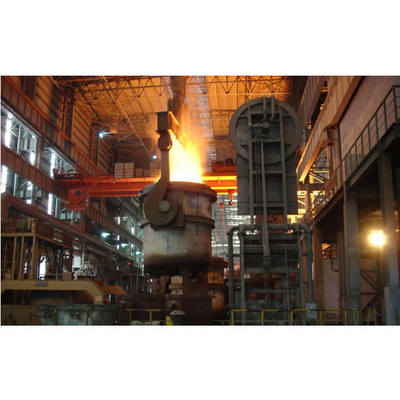
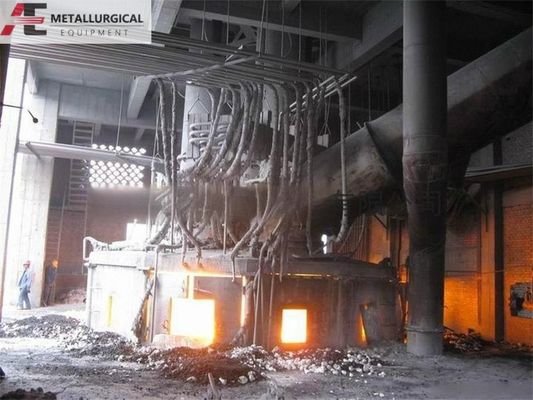
For electric furnace (EAF) steelmaking, the development of the Ladle Furnace (LF) method was significant. By transferring the reduction period refining operations from the EAF to the ladle, the LF greatly contributed to improving EAF productivity. Today, various secondary refining units are applied in conjunction with EAFs, which are themselves equipped with functions like oxygen blowing, to meet the demands for high-quality steel grades.
In the 1980s, as the production of high-purity steels, such as ultra-low carbon steels, increased, requirements for large-scale molten steel treatment grew more stringent, necessitating process simplification. Concurrent improvements in various treatment technologies led to the integration of additional functions into existing secondary refining processes. This accelerated the evolution of reaction vessels from simple units into intensive, multifunctional systems.
A significant challenge in secondary refining is the relatively rapid temperature drop of molten steel. To address this and reduce the thermal load on converter refractories (which otherwise requires higher tapping temperatures), equipment with efficient heating capabilities has been actively developed and widely adopted.
Furthermore, to reduce the production cost of low-phosphorus steels, the industry has pursued a dual approach alongside the introduction of hot metal pretreatment technology. On one hand, it optimizes the respective smelting functions of the converter and secondary refining. On the other hand, it develops advanced refining processes. This integrated effort has driven the rapid advancement of production technologies for achieving high-purity, clean molten steel.
We are a professional electric furnace manufacturer. For further inquiries, or if you require submerged arc furnaces, electric arc furnaces, ladle refining furnaces, or other melting equipment, please do not hesitate to contact us at susan@aeaxa.com


 Your message must be between 20-3,000 characters!