Defining Secondary Refining
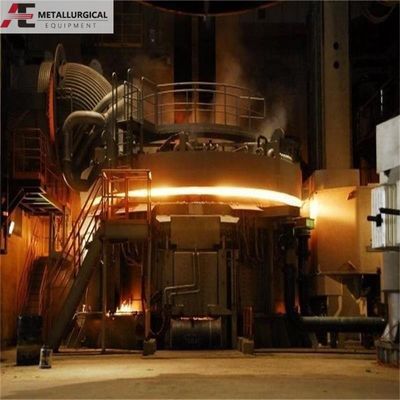
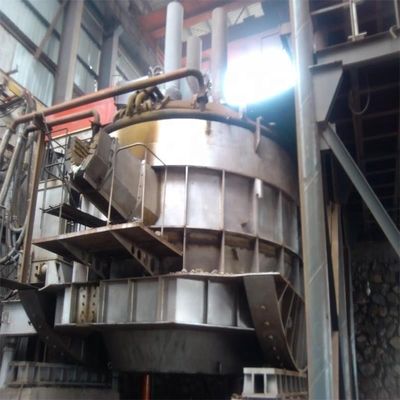
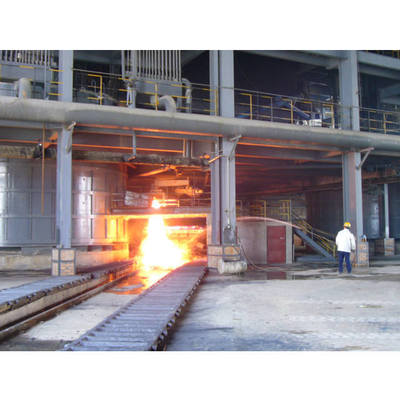
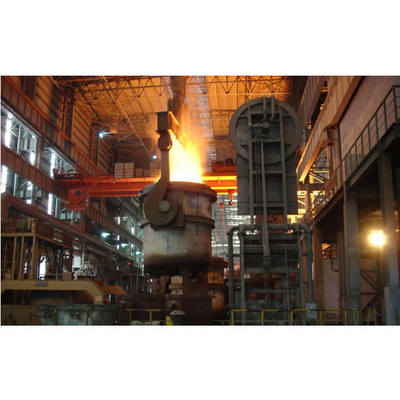
Secondary refining, also known as ladle metallurgy, refers to the refining process conducted outside of the primary steelmaking furnace, such as a basic oxygen furnace (BOF), open hearth, or electric arc furnace (EAF). Its primary objectives include deoxidation, desulfurization, dephosphorization, decarburization, removal of non-metallic inclusions, alloying, and precise composition adjustment.
Global trends highlight the importance of this technology. Over the past 30 years, world crude steel production has grown, with BOFs accounting for approximately 60% and EAFs for nearly 40% of total output. The adoption of continuous casting has significantly increased yield, with current ratios reaching about 95% in leading regions like Japan, Europe, and the United States. Worldwide, continuous casting accounts for roughly 85% of steel production, a figure expected to rise to about 90%.
The integration of secondary refining has been crucial for achieving high-quality, high-yield continuous casting. In the European Union, for example, vacuum treatment capacity now covers over 80% of steel output. Ladle furnaces, initially adopted in EAF plants, are now increasingly used in BOF shops as well, with more than 30% of EU steel output undergoing ladle furnace treatment.
A key enabling development was the introduction of gas stirring in the ladle to homogenize steel composition and temperature. The widespread implementation of secondary refining has since led to substantial improvements in both steel output and quality.
Core Tasks and Objectives of Secondary Refining:
Separate molten steel from slag during tapping and casting.
Deoxidize the molten steel.
Perform final alloying and composition trimming.
Adjust and control casting temperature.
Improve steel cleanliness.
Modify the morphology of inclusions.
Remove dissolved hydrogen [H] and nitrogen [N].
Conduct deep decarburization and desulfurization.
Ensure uniform steel composition and temperature.
Capabilities and Future Targets:
Secondary refining enables the production of ultra-high-purity steels:
Decarburization: Vacuum processes can reduce carbon to ~20 ppm, with targets as low as 10 ppm for special grades.
Dephosphorization: Targets aim for phosphorus levels of ~30 ppm in specialty steels.
Desulfurization: Levels can be consistently reduced to 10 ppm through hot metal and steel desulfurization.
Denitrogenation: Future targets for special steels are around 20 ppm nitrogen.
Deoxygenation: Current capabilities achieve total oxygen contents of ~15 ppm, with minimum targets near 10 ppm.
Degassing: Vacuum treatment can reduce hydrogen to approximately 1 ppm.
Modern Steelmaking Process Flow:
The contemporary steelmaking route is highly flexible and tailored to the product mix. A typical sequence for high-quality steel involves:
1. Hot metal desulfurization.
2. Primary steelmaking in a BOF or EAF.
3. Secondary refining, which may include vacuum treatment (e.g., RH or tank degassing) and reheating (via ladle furnace or aluminothermic methods).
4. Final inclusion modification by adding calcium-based materials.
5. Continuous casting.
This integrated approach ensures the production of clean, compositionally precise steel required for demanding applications.
We are a professional electric furnace manufacturer. For further inquiries, or if you require submerged arc furnaces, electric arc furnaces, ladle refining furnaces, or other melting equipment, please do not hesitate to contact us at susan@aeaxa.com


 Your message must be between 20-3,000 characters!