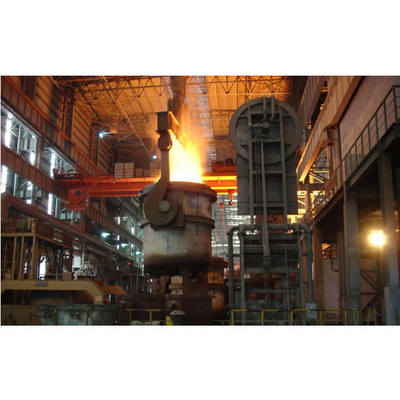
Billet Manufacturing – Continuous Casting Machine (CCM)
Billet manufacturing stands as a crucial segment within the steel production process, serving as the foundation for a diverse array of downstream applications. The advent of the continuous casting machine (CCM) has revolutionized steel billet manufacturing, offering an efficient and cost-effective method for producing high-quality steel billets. This article delves into the process of manufacturing billets using continuous casters and underscores their advantages over traditional methodologies.
Characteristics of Steel Billet Manufacturing
Traditionally, steel billets were produced through ingot casting, a labor-intensive and time-consuming process that encompassed multiple steps and resulted in significant material wastage. However, with the introduction of continuous casters, the industry witnessed a substantial shift in terms of efficiency and productivity.
Continuous casting machines are at the vanguard of modern billet manufacturing, providing a seamless, continuous process that minimizes material wastage and enhances product quality. The process commences by pouring molten metal into a water-cooled copper mold, which serves as a containment vessel. The mold is meticulously designed to shape the molten metal into a solid blank, ensuring uniformity and consistent dimensions.
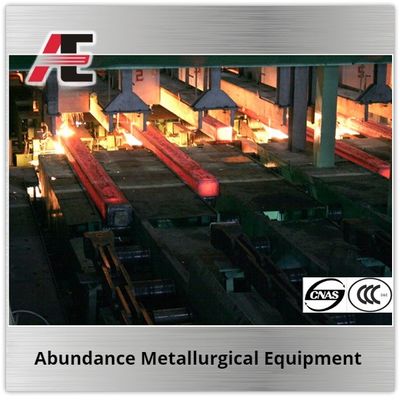
As the molten metal begins to solidify, a series of rollers and water jets continuously pull it through the mold. This controlled movement guarantees a constant flow of material and prevents the formation of any irregularities.
The solidified billet is then guided through a series of cooling zones, where water sprays further facilitate the solidification process, ensuring that the billet is fully solidified by the time it reaches the end of the machine.
Advantages of Continuous Casting Machine (CCM)
Continuous casters offer a plethora of advantages. Firstly, the continuous process eliminates intermediate steps such as ingot casting and reheating, thereby reducing energy consumption and production costs. Additionally, the continuous casting method enables higher productivity, allowing manufacturers to meet escalating demand in a timely manner.
Moreover, CCMs can exert better control over the internal structure of the billet, thereby enhancing its mechanical properties and improving product quality. The uniform cooling process ensures a consistent grain structure throughout the billet, reducing the risk of defects and augmenting its overall strength and durability. This is particularly crucial for industries that further process the billet into various components.
Furthermore, continuous casters empower manufacturers to produce billets, blooms, slabs, round billets, and more in a variety of sizes and shapes, providing flexibility and customization options to cater to specific customer requirements. This versatility is pivotal in ensuring that the billet can be seamlessly integrated into downstream manufacturing processes without any additional modifications or wastage.
In summary, continuous caster billet manufacturing has revolutionized the billet making industry by streamlining the production process, minimizing material wastage, and enhancing product quality. Its continuously controlled casting method offers numerous advantages over traditional ingot casting, making it the preferred choice of manufacturers worldwide.
As the demand for high-quality steel billets continues to soar, CCMs are expected to play an increasingly pivotal role in meeting these requirements efficiently and effectively.
We are a professional electric furnace manufacturer. For further inquiries, or if you require submerged arc furnaces, electric arc furnaces, ladle refining furnaces, or other melting equipment, please do not hesitate to contact us at susan@aeaxa.com


 Your message must be between 20-3,000 characters!