Basic Information on Electric Arc Furnaces
An arc represents a form of arc discharge within a gas. During gas arc discharge, the voltage between electrodes remains extremely low, while the current flowing through the gas is substantial, producing a dazzling white light and generating exceptionally high temperatures in the arc zone (approximately 5000K). This immense current density arises from thermionic emission at the cathode and the self-emission of electrons. Specifically, a layer of positive ions forms near the cathode, creating a strong electric field that prompts the cathode to spontaneously emit electrons.
A large quantity of electrons collides with gaseous molecules between the electrodes, ionizing them and generating an even greater number of positive ions and secondary electrons. Under the influence of an electric field, these charged particles strike the cathode and anode respectively, resulting in elevated temperatures. The cathode, due to the energy expended in electron emission, maintains a lower temperature compared to the anode. Additionally, the interelectrode region experiences high temperatures owing to the recombination of some positive ions and electrons.
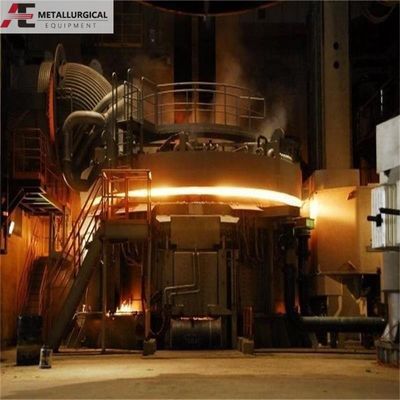
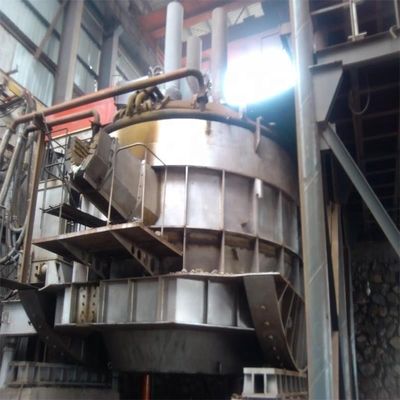
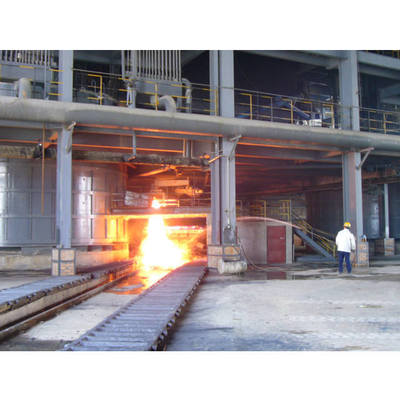
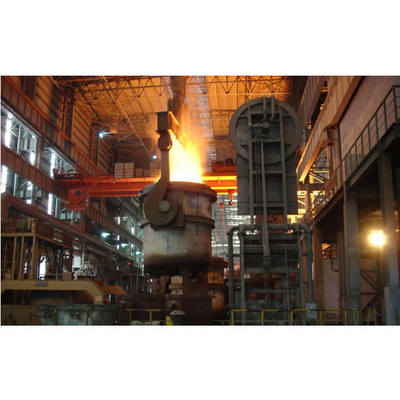
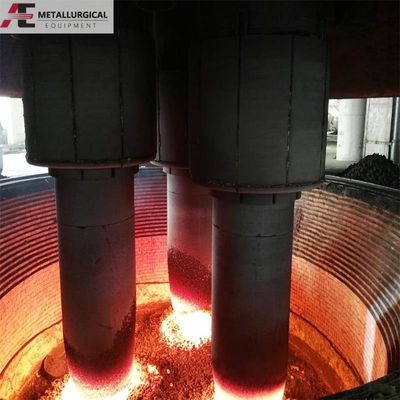
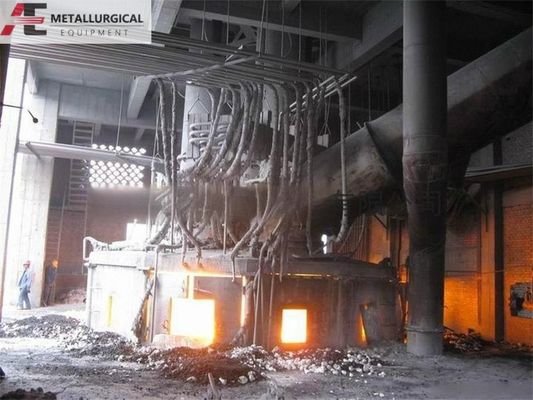
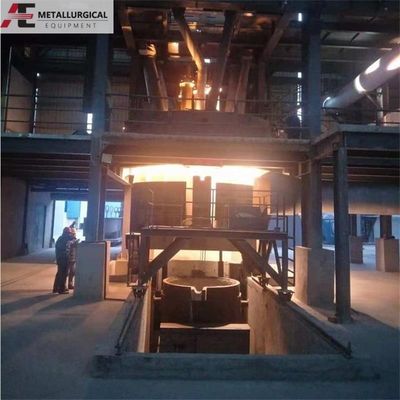
Electric arc furnaces are industrial furnaces that leverage this principle to smelt metals. When operated within a vacuum environment, they are referred to as vacuum arc furnaces. Vacuum arc smelting is characterized by high current and low voltage, constituting a short arc operation. Typically, the arc voltage ranges from 22 to 65V, with a corresponding arc length of 20 to 50mm (the latter being applicable for larger ingots).
Since the successful experiment of smelting platinum wire in 1839, researchers have dedicated over a century to studying the smelting of refractory metals. The vacuum electric arc furnace was officially adopted in industrial applications in 1953. Until 1956, non-consumable furnaces were predominantly used in the United States and many European countries for smelting titanium. However, in 1955, the use of consumable furnaces for steel production commenced. By around 1960, the weight of ingots produced by consumable furnaces had surpassed 30 tons, marking a significant milestone in their development.
The current state of advancement in this field can be exemplified by the vacuum consumable furnaces manufactured by the United States' Consack Company. To enhance productivity and equipment utilization, these furnaces are designed such that two furnaces share a single set of main power supply, vacuum system, and automatic control system. This innovative approach not only streamlines operations but also optimizes resource allocation, reflecting the ongoing evolution and sophistication of electric arc furnace technology.
We are a professional electric furnace manufacturer. For further inquiries, or if you require submerged arc furnaces, electric arc furnaces, ladle refining furnaces, or other melting equipment, please do not hesitate to contact us at susan@aeaxa.com


 Your message must be between 20-3,000 characters!