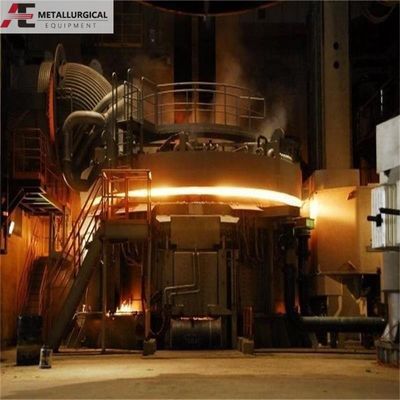
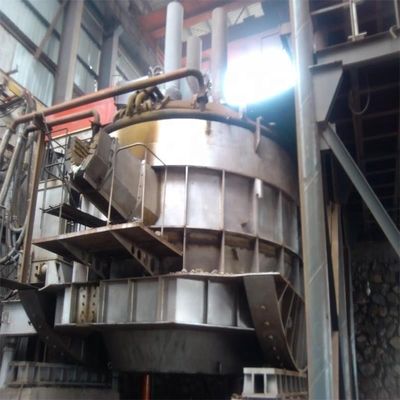
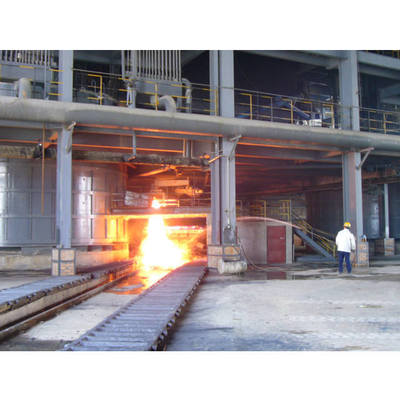
Arc Furnace Shell: Structure and Operating Environment
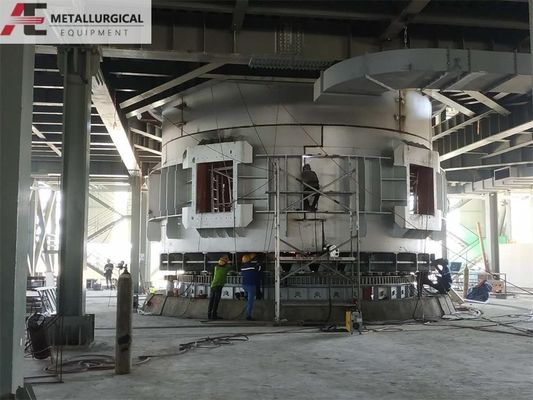
The arc furnace shell typically adopts a cylindrical design, featuring a truncated conical bottom and a spherical disc bottom to ensure optimal strength. This structure is crucial as it supports the weight of both the furnace lining and the molten metal within. Additionally, it must withstand the thermal stress generated by the expansion of the furnace lining during operation. Generally, the temperature across most sections of the furnace shell hovers around 200°C. However, when localized burning of the furnace lining occurs, the shell temperature can rise significantly. In smaller furnaces, components such as the furnace top, electrode lifting mechanism, and tilting furnace are directly attached to the shell, which also interfaces with the furnace door and steel outlet.
The furnace shell must possess sufficient mechanical strength and rigidity to perform its functions effectively. It is meticulously welded together with both horizontal and vertical reinforcing plates, particularly around openings, to enhance its structural integrity. Special welding rings are installed along the shell's circumference, and these reinforcing rings are often water-cooled to prevent deformation. Despite these measures, the entire furnace body may still exhibit a tendency to deform due to restricted expansion.
For larger electric furnaces, a cage-type shell design is sometimes employed. In this configuration, the lower portion of the shell, including the bottom, is constructed from a welded steel plate, forming a solid base. The upper half of the shell, however, is designed as a cage, comprising vertical and horizontal steel pieces welded to the internal shell steel plate. Recently, advancements have allowed for water-cooled blocks to be directly suspended within the cage shell, serving as the furnace wall. Horizontal supports, made of steel pipes, can double as the main water supply and drainage conduits for these cooling blocks.
In furnaces with a diameter ranging from 3 to 4 meters, the shell and lining can be replaced as a single unit, significantly expediting the furnace repair process. For larger furnaces, the shell may be constructed in two separate parts, with the joint strategically positioned to avoid the slag line. This design allows the upper shell and furnace wall to be lifted away together for maintenance or replacement. Additionally, numerous evenly distributed holes are drilled into the steel plate of the furnace shell to facilitate the removal of moisture during the oven-drying process, ensuring optimal operating conditions.
We are a professional electric furnace manufacturer. For further inquiries, or if you require submerged arc furnaces, electric arc furnaces, ladle refining furnaces, or other melting equipment, please do not hesitate to contact us at susan@aeaxa.com


 Your message must be between 20-3,000 characters!