Application and Development Trajectory of Vacuum Melting Furnaces
Overview of Application and Development Trends
The vacuum melting furnace, a pivotal piece of vacuum equipment in the market, is extensively utilized for the preparation of metal alloy materials. Vacuum induction melting technology, in particular, has found widespread application across various occasions and domains. This article provides an in-depth exploration of the application scenarios and developmental trends of vacuum melting furnaces.
Currently, a comparative analysis is conducted on the merits and demerits of different vacuum melting furnaces and vacuum induction furnace variants. Anticipating the future trajectory of vacuum induction furnaces, we elucidate their evolving trends. The advancement of vacuum induction furnaces is primarily manifested in the gradual refinement of their overall equipment structure, a pronounced trend towards modularization, and increasingly intelligent control systems.
Meeting Modern Industrial Demands
With the rapid strides in modern industrial technology, the expectations for mechanical parts have soared, with stringent usage environments demanding metal materials with superior properties such as high-temperature resistance, wear resistance, and fatigue resistance. For certain specialized metals or alloy materials, whether in the initial R&D testing phase or subsequent mass production and utilization, the quest for high-performance metal alloy materials necessitates the support of advanced metal smelting equipment and surface heat treatment equipment.
Structural Features
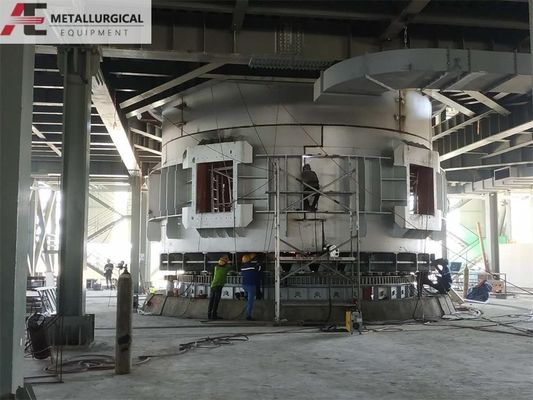
This vacuum melting furnace product comprises several key components: a furnace cover, furnace body, furnace bottom, crucible rotation mechanism, vacuum system, and intermediate frequency power control system.
-
Furnace Cover, Body, and Bottom: These components adopt a double-layer water-cooling structure, ensuring that the furnace shell temperature remains below 60°C. The furnace cover, which is manually opened, is equipped with observation holes and baffles. To facilitate the addition of alloy elements during the melting process, an alloy feeder is specially installed on the furnace cover.
-
Furnace Body: Inside the furnace body, an induction coil is positioned, enabling the melt within the crucible to be effortlessly poured into the ingot mold by manually turning a handle located outside the furnace. The ingot mold can be designed with water-cooling capabilities. Additionally, a temperature measuring device is installed at the upper part of the crucible.
-
Vacuum System: The vacuum system employs a two-stage pumping configuration, consisting of a K-300 oil diffusion pump and a 2X-70 mechanical pump. The mechanical pump is outfitted with an electromagnetic bleed valve to prevent oil return in the event of a power failure. The vacuum unit also features an air release valve and an inflation valve for enhanced operational control.
In summary, vacuum melting furnaces, with their versatile applications and ongoing technological advancements, are poised to play an increasingly pivotal role in the preparation of high-performance metal alloy materials, meeting the ever-escalating demands of modern industrial applications.
We are a professional electric furnace manufacturer. For further inquiries, or if you require submerged arc furnaces, electric arc furnaces, ladle refining furnaces, or other melting equipment, please do not hesitate to contact us at susan@aeaxa.com


 Your message must be between 20-3,000 characters!