Advantages of the Vacuum Electric Arc Furnace
Working Principle of the Vacuum Electric Arc Furnace
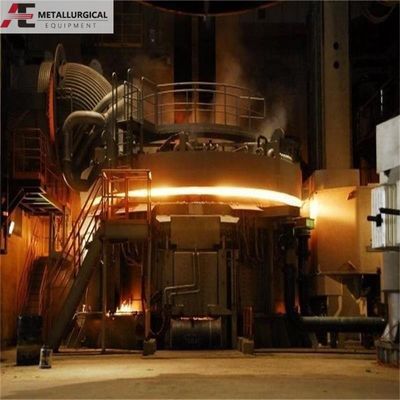
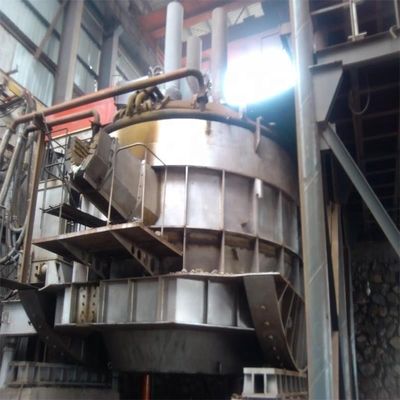
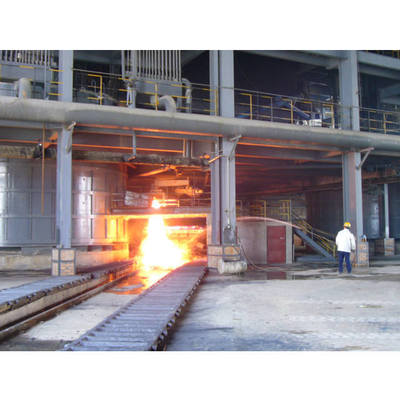
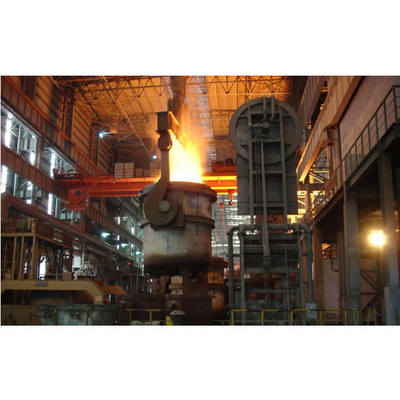
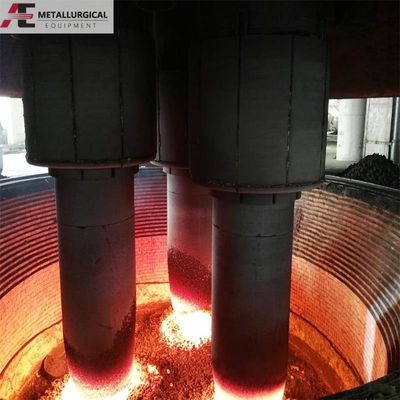
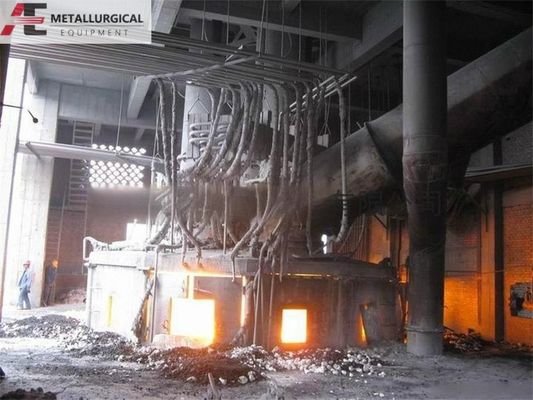
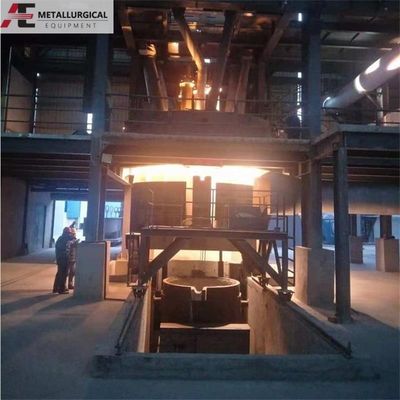
The vacuum electric arc furnace is an industrial furnace specifically designed to smelt metals under vacuum conditions. In this environment, the electric arc furnace operates as a vacuum electric arc furnace, utilizing high current and low voltage for short arc operations.
The vacuum arc smelting process is characterized by gas arc discharge, where the voltage between electrodes is notably low, yet the current passing through the gas is relatively high. This results in an extremely high temperature in the arc zone, approximately 5000K. The large current density stems from thermionic emission and self-emission of electrons. Specifically, a layer of positive ions forms around the negative electrode, creating a strong electric field that prompts the cathode to emit electrons automatically. These electrons collide with gas molecules between the two poles, ionizing them and generating more positive ions and secondary electrons. Under the influence of an electric field, these particles collide with the cathode and anode, respectively, producing high temperatures. The cathode temperature is lower than that of the anode because some energy is utilized for electron emission. Additionally, the high temperature arises from the recombination of certain positive ions and electrons.
Generally, the arc voltage ranges from 22 to 65V, with a corresponding arc length of 20 to 50mm (the latter for larger ingots). Since the successful platinum wire smelting experiment in 1839, over a century passed before people began researching the smelting of refractory metals. In 1953, vacuum electric arc furnaces were introduced into industrial production. By 1956, the United States and many European countries were still smelting titanium in non-consumable furnaces, while in 1955, they started using consumable furnaces for steel production. Around 1960, the weight of steel ingots produced by consumable furnaces exceeded 30 tons and began to take shape. Currently, the vacuum consumable furnaces produced by Kangsai Company exemplify this development trend. To enhance production efficiency and equipment utilization, two furnaces share a single main power supply, vacuum system, and automatic control system.
Heat treatment of workpieces or materials in a vacuum arc furnace can significantly extend the service life of tools and molds. This process prevents oxidation and decarburization, resulting in a bright surface, minimal deformation, energy savings, and pollution-free operation. Moreover, it can alter the mechanical and metallurgical properties of the materials.
Advantages of the Vacuum Melting Furnace
The vacuum melting furnace is primarily employed for smelting reactive and insoluble metals, hard alloys, magnetic materials, and stainless steel. It essentially operates under low pressure (decompression) conditions. The higher the degree of vacuum, the closer the environment approaches a neutral atmosphere, minimizing chemical reactions of the material.
-
Gas Removal and Shrinkage Promotion: Vacuum conditions facilitate the removal of adsorbed gases and significantly promote shrinkage during the later stages of smelting.
-
Impurity Removal: Vacuum helps eliminate impurities such as silicon, aluminum, magnesium, calcium, and their oxides, thereby purifying the materials.
-
Improved Wettability: Vacuum enhances the wettability of liquid phase smelting, aiding in shrinkage during the smelting process and improving the alloy's structure.
-
Ideal Inert Environment: When other primary or inert gases are unsuitable, or when materials are prone to decarburization and carburization, a vacuum melting furnace serves as an ideal alternative.
-
Reduced Pollution: Vacuum smelting reduces product contamination from harmful atmospheric components such as water, oxygen, and nitrogen. For instance, reducing the water content in electrolytic hydrogen to -40°C is challenging under normal conditions, but vacuum smelting achieves this within a few hundred degrees.
-
We are a professional electric furnace manufacturer. For further inquiries, or if you require submerged arc furnaces, electric arc furnaces, ladle refining furnaces, or other melting equipment, please do not hesitate to contact us at susan@aeaxa.com


 Your message must be between 20-3,000 characters!